SSI Eligibility for People With Limited Financial Resources depends on more than a low bank balance. Supplemental Security Income also requires a medical or categorical test for age, blindness, or disability. The Social Security Administration (SSA) still has to apply its rules to income and assets.
Limited cash and little work history do not automatically bar you.
As of 2026, one person can generally have up to $2,000 in countable resources after exclusions. An eligible couple can generally have $3,000. Here is how the medical, financial, and household tests fit together.
SSI Eligibility for People With Limited Financial Resources
Quick Answer
SSI Eligibility for People With Limited Financial Resources requires two separate checks. First, you must meet SSA’s age, blindness, or disability rule. Second, your countable income and resources must stay within legal limits.
Low wealth alone does not prove a qualifying disability. Official rules come from the SSA benefits overview.
Why SSI Eligibility Has Two Separate Tests
SSA uses two gates, and failing either one can block cash SSI. Gate 1 asks whether you are aged, blind, or disabled under Title XVI. Gate 2 asks whether countable income and resources stay within applicable limits.
Passing one gate does not mean you pass the other.
| Eligibility gate | What SSA reviews | If you do not qualify |
|---|---|---|
| Medical or categorical | Age, statutory blindness, or disability | SSI generally cannot pay, though Medicaid may still be possible |
| Financial | Income after exclusions, resources, and household rules | Cash SSI stops, but special work protections may remain |
Start with the medical or categorical gate. If you are 65 or older, you meet the age category. Next, SSA reviews your income and resources.
If you are younger, SSA checks whether you meet the statutory blindness or disability standard. Only after that does the financial test control the outcome. For a basic starting point, you can compare your situation with the current single-person income benchmark.
SSA also has a limited rule allowing up to 13 consecutive months based only on financial need. That provision does not create blanket eligibility for every low-income adult. It also doesn’t remove the need to report changing income, resources, or work.
A medical approval can remain useful even when earnings end cash SSI. Under Section 1619 and Medicaid rules, some disabled beneficiaries keep medical coverage or part of their benefits. So a denial for financial reasons does not always end every form of assistance.
Medical or Categorical Eligibility for Adults, Children, and Blind Adults
The first gate requires you to fit at least one of SSI’s three broad categories. You must be 65 or older, meet the statutory blindness standard, or qualify as disabled. Most applicants must also meet SSA’s income and resource rules.
What adults under 65 generally need
For most adults under 65, SSA examines two main elements:
- Substantial gainful activity, or SGA. SGA is an earnings benchmark used to measure disability severity.
- Expected duration. The condition must generally last at least 12 months or meet a rule for a shorter period.
To qualify, a physical or mental condition must prevent you from engaging in SGA. SSA may consider your earnings, job duties, treatment, daily activities, and functional limitations. A medical diagnosis alone usually does not establish disability.
The SGA amount changes each year. It is not the same number as the SSI income limit. Working part-time may or may not prevent SGA, depending on the amount earned and the evidence about your work.
How statutory blindness can qualify
SSI has a special blindness standard. It generally includes corrected visual acuity of 20/200 or worse in the better eye, or a field of vision no wider than 20 degrees. A person who meets this standard can qualify without the usual 12-month waiting period.
How children qualify
Children do not use the adult SGA test or the usual 12-month duration rule. Instead, they must have a condition that causes marked functional limitations. Those limitations must be severe enough to be comparable with the limitations of a disabled adult.
Parents should document learning, development, daily activities, treatment, and school support. Conditions affecting development, cognition, communication, or self-care often need detailed records. Our developmental disability benefit guide explains the adult framework more fully.
How the medical decision is made
SSA reviews medical records, treating-provider statements, hospital records, medications, laboratory results, and functional evidence. Diagnosis, prognosis, treatment history, and the ability to perform daily activities all matter.
A condition that seems severe but lasts only a few months usually will not meet the adult waiting rule. An exception may apply under a special SSA category or blindness rule. Don’t assume you qualify because symptoms are severe.
You still need evidence that matches the legal standard.
Current SSI Payment Amounts, Income Limits, and Resource Limits
As of 2026, federal SSI payments remain modest, while the resource limits retain their long-standing dollar amounts. The figures come from the official SSA amounts page.
| 2026 measure | Eligible individual | Eligible couple |
|---|---|---|
| Maximum federal monthly SSI payment | $992 | $1,489 |
| Published monthly income limit | $1,067 | $1,601 |
| Countable resource limit | $2,000 | $3,000 |
The couple figures apply when both partners are financially eligible. Being married does not automatically put an applicant in the couple category.
A state supplementary payment can increase your total monthly assistance. Some states provide a flat supplement, while others use an income-related payment. Essential person payments also depend on state rules.
State aid can affect how SSA calculates the applicable income limit, so the final amount varies by residence.
The payment amount and income limit serve different purposes. The payment amount shows the maximum federal cash benefit before deductions. The income limit is used in the eligibility calculation after exclusions and household rules.
The resource limits have remained unchanged in nominal dollars for many years. They apply to countable resources held by the applicant and spouse, when relevant. They do not create a $2,000 spending allowance that families should quickly exhaust.
SSI does not use the federal poverty guidelines as its eligibility standard. This distinction matters because several programs use different figures and test different kinds of income. Low-income Medicaid programs may also apply different resource rules.
Cash SSI can affect other benefits, but its impact varies. It often helps with housing, food, and Medicare cost assistance. Don’t assume that receiving SSI reduces every assistance program by the same amount.
Avoid spending down savings or transferring assets merely to reach the limit. A transfer may leave the money countable in your name. It can also trigger a transfer penalty under federal SSI rules.
How SSA Counts Income, Assets, and Exclusions
Think of SSA’s calculation as a filtering process. It starts with what you receive or own, removes valid exclusions, applies household rules, and then compares the result with the limits. Countable income is money available for food and shelter after exclusions. Countable resources are assets counted under SSI’s resource rules.
How income is treated
Most income starts as countable. The main exceptions are specific deductions and exclusions.
- Wages: Gross earnings generally count before taxes and other deductions.
- Self-employment income: Business expenses are handled separately before SSA calculates countable net earnings.
- SSDI, pensions, and retirement benefits: These generally count as income.
- Unemployment and veterans benefits: Most federal benefits count, subject to specific rules.
- Child support: Treatment depends on who receives it and whether the child is eligible. See the detailed support income rules.
- Tax refunds: A refund is generally excluded from income for the month received, but the money increases your bank balance.
- Gifts: Cash gifts generally count as income when received and should be reported.
Rental income also matters if you rent out property. You need clear records for rental expenses and personal use. The rental income treatment becomes more complicated when you live in the property.
For most cases, SSA excludes the first $20 of monthly unearned income. It also excludes the first $65 of monthly earned income for an eligible individual or couple. Special formulas and deductions may further reduce countable earnings.
How assets are treated
Assets are reviewed under separate resource rules. Income received in one month does not always remain income forever.
| Asset or transaction | General SSI treatment |
|---|---|
| Primary home | Generally excluded |
| One vehicle | Generally excluded, subject to value and ownership rules |
| Bank and brokerage accounts | Countable unless a specific exclusion applies |
| Joint account | Often treated as shared until evidence proves otherwise |
| Tax refund | Not income, but usually a countable resource when received |
| Properly established ABLE account | Excluded as a resource |
| Burial funds and burial plot | Limited exclusion of up to $1,500 for funds |
| Ordinary debts | Do not automatically reduce countable resources |
People often misunderstand vehicle ownership limits because SSA does not apply the same vehicle exclusion to every household. Value, ownership, and regular use can all matter.
A home and vehicle can cause confusion when you’re trying to judge eligibility. Let’s assume one person owns the home where they live, one older car, and $900 in savings.
The home and vehicle are generally excluded under the listed conditions. The $900 remains a countable resource, but it stays below the $2,000 individual limit. The person must still satisfy the age, blindness, or disability test.
Now consider a person who has $800 in monthly wages and receives a $100 pension. Under the basic $65 earned and $20 unearned exclusions, countable income would be about $815 before any special deduction. That amount falls below the 2026 individual income limit, but the person still needs to qualify medically.
A large settlement creates a different problem. Suppose a person receives $25,000 from an insurance settlement and places it in a bank account. The settlement may be excluded as income, yet the money normally becomes a countable resource.
Spending it without a valid reason can cause SSI to end and may create an overpayment.
Household rules can change the answer again. Income from a spouse, parent, or other person may be considered available to you. The family household rules can affect eligibility even when you use your own money for expenses.
Never transfer savings to a child, sibling, or partner to hide assets. Gifts and informal loans may be examined under SSA’s rules. Report income and resource changes promptly, but don’t make major financial moves without qualified advice when SSI is involved.
Household and One-Off Circumstances That Can Change Eligibility
Your household can affect SSI even when your health and own bank balance haven’t changed. SSA may consider income or resources available to you because of who lives with you or supports you. The key is whether that person is financially eligible and which household rule applies.

Image source: Wikimedia Commons / British Cartoon Prints Collection
SSA does not simply combine everyone’s money because you share a home. It applies different rules to spouses, parents, children, and people who provide regular support. Report any change in your household as soon as it happens.
How do spouses, parents, and children affect the calculation?
A spouse can affect your payment and eligibility even if you keep separate bank accounts. If both spouses are financially eligible, SSA generally applies the eligible couple limits. If only one spouse qualifies, SSA may still consider some income or resources available to the applicant.
Parents’ income usually does not determine an adult child’s SSI eligibility. It becomes much more important when the applicant is a child. The family income rules can also affect a senior who lives with children.
Check these common changes:
- Marriage or separation can change the financial category.
- Moving in with a partner can affect deemed income and resources.
- A child’s eligibility may depend on parental income and resources.
- Child support treatment depends on who receives the payment and the child’s eligibility.
- A person who regularly provides food, shelter, or other support may trigger a household review.
Don’t assume that paying your own bills proves that all household income is unavailable to SSA. Keep receipts for rent, utilities, food, and medical expenses. They can help explain your actual situation if SSA requests more information.
What happens when money arrives at once?
A one-time payment can affect both your monthly income and your resources. The result depends on what created the payment and how you hold the money afterward.
| Payment or transaction | General treatment |
|---|---|
| Tax refund | Usually excluded as income for the month received, then often countable as a resource |
| Cash gift | Generally treated as income when received |
| Insurance settlement | May have an income exclusion, but the funds can become countable resources |
| Bona fide loan | Usually not income if the loan is genuine and documented |
| Back pay or arrears | Often counts as income when received |
A large refund can make an applicant ineligible for a month even when it wasn’t income. Later, the money may remain available in a bank account. SSA reviews both sides of the transaction.
Never accept an undocumented “loan” from someone who expects you to repay nothing. A fake loan can be treated as a gift. It may also complicate your resource count and trigger an overpayment review.
Why do living arrangements matter?
Living arrangements matter because SSA may treat the home, vehicle, shelter, or institutional setting differently. The home you personally occupy is generally excluded as a resource. A second property may not receive the same treatment.
If you move into a hospital, nursing home, or other institution, payment rules can change. Ask SSA about the expected payment and resource treatment before a planned move. Homeless applicants may still qualify.
Use the address format SSA requests for the living situation.
State supplements can also depend on where you live. A person may qualify for federal SSI but receive no state supplement. Your residence affects the final payment amount, not the basic federal eligibility test.
What if you are not a U.S. citizen?
Some noncitizens can qualify for SSI, but immigration status matters. Certain statuses have waiting periods or restrictions. Others qualify only when additional conditions are met.
A green card, work permit, or visa by itself doesn’t answer the SSI question. SSA reviews the exact category, entry date, work history, and any exemption that may apply. Provide immigration documents through official SSA channels.
Don’t rely on a private website’s immigration conclusion.
SSI vs. SSDI, Medicaid, SNAP, and Other Assistance
SSI is only one part of a broader safety net. The right program depends on whether you need cash, health coverage, food help, or housing support. Many people qualify for more than one program.
| Program | Main basis | What it may provide | Key distinction |
|---|---|---|---|
| SSI | Age, blindness, or disability plus limited income and resources | Monthly cash and possible health coverage | Work credits are not required |
| SSDI | Disability plus Social Security work history | Monthly cash based on work record | It does not depend on current poverty |
| Medicaid | Disability, income, or SSI-related pathway | Health coverage | It may continue after cash SSI ends |
| SNAP | Household income and federal or state rules | Monthly food benefits | SSI recipients are generally eligible |
| TANF or general assistance | State rules, often involving families or extreme need | Temporary cash or support | Availability varies by state |
How does SSI compare with SSDI?
SSDI pays based on your Social Security work record. You generally need enough work credits and a qualifying disability. It can continue regardless of your current income, subject to other program rules.
SSI looks at current financial need. You can qualify without having worked, but you must meet the medical or categorical test. Some disabled people receive both benefits.
In that case, SSI is often reduced by the Social Security payment.
If you have a strong work history, apply for both programs when appropriate. If you have little or no work history, don’t assume SSDI is the better option. SSDI may be unavailable even when SSI is possible.
Does Medicaid stop when cash SSI stops?
No. Many people keep health coverage after cash SSI ends because their earnings increased. The exact path depends on the state.
In a 1634 state, SSI receipt usually leads to Medicaid eligibility automatically. In a 209(b) state, you may need to apply through a separate disability pathway. Section 1619 protections can also help people who continue working while their SSI cash benefit changes.
Ask your state Medicaid agency for the rule that applies where you live. Don’t assume that losing an SSI payment automatically means losing insurance.
What other assistance may still be available?
SNAP can provide food benefits even when SSI is small. SSI recipients are generally treated as categorically eligible for SNAP, though state administration and minimum benefit rules differ. The SNAP rules explain how food benefits can work alongside SSI.
TANF is mainly designed for families with dependent children. General assistance may help adults who don’t qualify for SSI, but each state sets its own rules. Housing programs such as public housing or local rent subsidies use separate income and rent calculations.
You may receive SSI and SNAP together. You may also use housing assistance while receiving SSI. A housing subsidy won’t automatically replace the need for a complete SSI application.
How to Prepare and Apply for SSI Step by Step
A complete application gives SSA a clearer picture of your disability, income, and household. Gather evidence before you start. Keep copies of everything you submit.
1. Build an evidence packet
Use the information below to organize your records. SSA may request additional documents later.
| Evidence category | Useful examples |
|---|---|
| Medical | Treating-provider records, hospital records, medications, test results |
| Functional | Daily activities, limitations, treatment history, work duties |
| Income | Paystubs, benefit letters, tax records, bank statements |
| Resources | Account balances, asset titles, vehicle information |
| Household | Marriage, dependents, who lives in the home, who provides support |
For a disability application, medical records should connect the condition to daily limitations. A list of diagnoses alone doesn’t show how the condition affects your ability to work.
2. Make your financial records current
List all income you expect to receive. Include wages, pensions, SSDI, VA benefits, unemployment benefits, and regular payments from other people. Include resources held in your name or jointly held accounts.
Don’t move money to a relative just to lower your balance. Don’t spend a settlement without understanding the SSI consequences. Keep bank records and receipts that explain each major transaction.
If you receive a large payment, contact SSA or a qualified benefits counselor before investing or distributing it. The payment’s treatment may depend on the month you receive it and the month the money becomes available.
3. File through an official SSA channel
Adults should use the official SSI application page or a Social Security office. Parents applying for a child use the children’s SSI application process. You can also apply by phone when SSA makes that option available.
Apply for SSDI at the same time if your work history may qualify you. SSA’s adult application can address both programs. There is no federal application or appeal fee.
Never give your Social Security number, medical records, or bank information to a stranger who promises approval. For practical account protection steps, see our identity theft protection guidance.
4. Complete interviews and medical reviews accurately
Answer every question about your condition, work, daily life, income, and household. If you cannot remember an exact date, give your best estimate and explain how you remember it.
Authorize SSA to request medical records. Attend any examination or consultation that SSA schedules. Missing an appointment can delay the claim.
If your condition, medications, living arrangement, or work status changes during the review, tell SSA. New evidence can support the claim, but you must report it accurately.
5. Track the claim after submission
Keep a record of the application date, claim number, calls, letters, and requested documents. Check official SSA channels for messages and status updates. Never assume silence means the application was closed.
If you cannot manage money, ask SSA about a representative payee. A payee manages the benefit for you and doesn’t automatically mean that you are ineligible. SSI may also be payable for earlier eligible months, subject to SSA’s rules.
Denials, Appeals, Overpayments, and Ongoing Reporting Rules
A denial or payment change doesn’t always end your rights. The next step depends on whether SSA found a medical problem, a financial problem, or both. Read the notice carefully before taking action.
What should you do if SSA denies your claim?
Start by identifying the exact reason for denial. A medical denial means SSA found that you didn’t meet the age, blindness, or disability test. A financial denial means your countable income or resources were too high under the rules used in your case.
You can usually request reconsideration within 30 days. A request for an administrative hearing is generally due within 60 days. Deadlines can differ in complex cases, so the notice controls.
The appeal filing steps explain how to submit a timely request. Include new medical records, corrected financial information, and a short explanation of why the decision is wrong.
If reconsideration does not resolve the issue, the case may proceed to an administrative law judge. Further review may involve the Appeals Council and federal court.
What if the claim or review is delayed?
A delay doesn’t automatically mean that SSA denied your claim. Complex medical records, missing documents, local office backlogs, and appeal scheduling can all affect timing.
Check the official status first. Our appeal status tracker can help you identify the kind of stage your claim is in. If the medical review itself is delayed, our delayed review guidance explains common warning signs.
Keep paying attention to deadlines while a review is pending. Don’t assume SSA’s silence extends an appeal deadline.
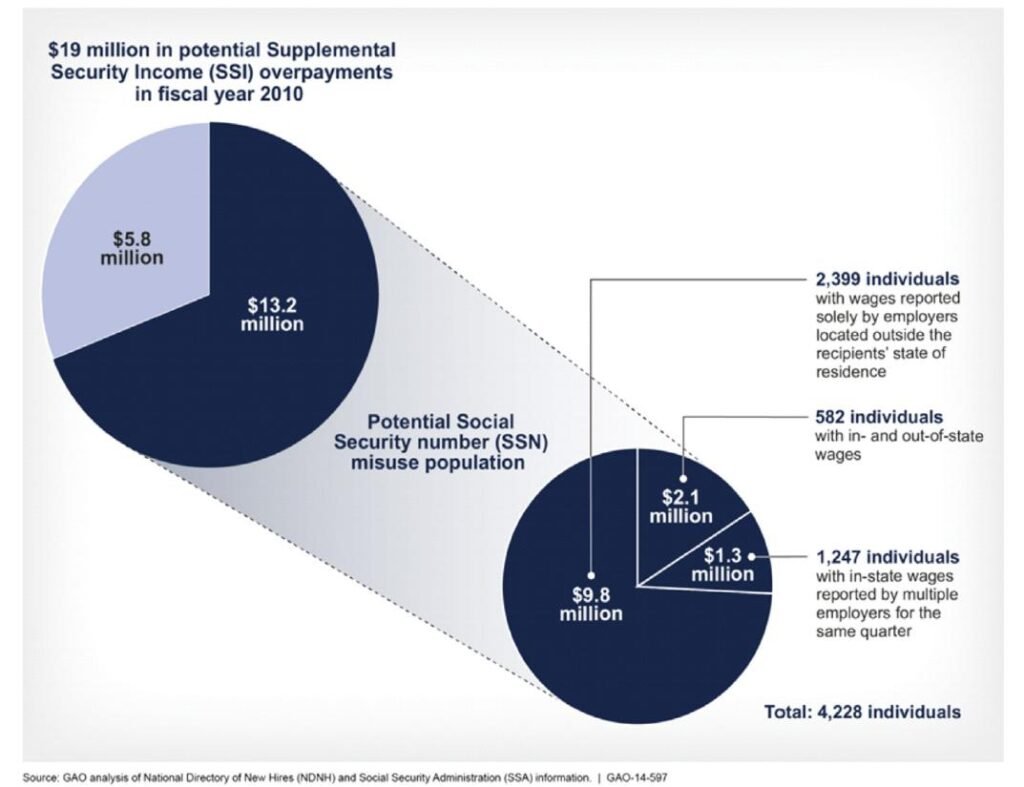
How do SSI overpayments work?
An overpayment is not automatically fraud. It can result from unreported income, incorrect resource information, a repayment of benefits, or SSA’s own calculation error.
You may owe the money, have it recovered through future benefits, or request an overpayment waiver. A waiver depends on the facts. Equity, fault, financial hardship, and the type of overpayment matter.
If you disagree, request an appeal while following any repayment instructions from SSA. Pay only through an official channel. Do not send cash, gift cards, or wire transfers to anyone claiming to “release” an SSI hold.
What must you report after approval?
Report changes in income, resources, address, household members, work status, and other circumstances that SSA asks you to report. A marriage, new job, inheritance, pension, or move can change the calculation.
SSA may schedule a continuing disability review or redetermination. Answer the questionnaire and attend any requested examination. If benefits should be managed by someone else, use the payee change process rather than stopping payments informally.
Final SSI Eligibility Decision Guide and FAQs
Use this sequence to organize your next steps:
- If you are 65 or older, check the age category first.
- If you are younger, check the statutory blindness or disability standard.
- If you meet that category, list monthly income and countable resources.
- Then apply household rules and valid exclusions.
- If the result is close to a limit, verify state supplements and payment rules.
- If SSA denies the claim, check the reason and deadline before appealing.
Do I qualify if I have no income?
Having no income helps with the financial test, but it does not replace the age, blindness, or disability requirement. SSA also reviews resources and household circumstances. A person with no cash but substantial countable assets may still fail financially.
Apply if you meet the medical or categorical test and your countable income and resources stay within the applicable rules.
Is $2,000 always the SSI resource limit?
The $2,000 figure is the usual countable resource limit for one person. It is not a total limit on everything you own. Your primary home and one vehicle may be excluded under specific rules.
An eligible couple generally has a $3,000 limit. Always check whether an asset is countable before spending or transferring it.
Does SSI stop if I work?
Cash SSI may stop or decrease when your earnings rise. That does not always end your medical eligibility. Section 1619 work incentives and state Medicaid rules can protect health coverage for some people.
Tell SSA about work and keep records of hours, gross pay, expenses, and any benefits received. Do not assume every dollar of earnings produces the same reduction.
How long do I have to appeal an SSI denial?
You usually have 30 days to request reconsideration after receiving an SSI decision. A hearing request is generally due within 60 days. The exact deadline appears on your notice.
If you miss the deadline, ask SSA promptly about any available exception. Do not wait for a decision on the merits before checking the filing date.
What should I do with a one-time payment?
Report the payment and keep proof of when and how you received it. A tax refund or certain settlement may be excluded as income for one month but become a countable resource later. A gift may count as income when received.
Ask SSA how the payment will affect eligibility before spending, moving, or investing the money.