SSI Eligibility for Homeless Adults in 2026 can be hard to judge when you have no fixed address. The Social Security Administration (SSA) still checks disability, income, and resources. Homeless status by itself does not qualify you for benefits.
For adults, SSI usually requires a medically determined physical or mental impairment expected to last at least 12 months. As of 2026, countable resources generally face limits of $2,000 for an eligible individual and $3,000 for an eligible couple. Start with those rules, then check the special issues that come with unstable housing.
SSI Eligibility for Homeless Adults in 2026
Quick Answer
SSI Eligibility for Homeless Adults in 2026 depends on disability, income, and resources. Homeless status alone does not qualify an adult for benefits. Most adults need a medically determined impairment expected to last 12 months.
Countable resources usually cannot exceed $2,000 for one person or $3,000 for a couple.
The Disability, Income, and Resource Rules for SSI
SSI uses a three-part eligibility test. You must meet the program’s disability rules, follow income rules, and stay within resource limits. The official SSA SSI guidance is the best source for current program rules.
Does your condition meet the adult disability standard?
For most adults, SSA looks for a medically determined physical or mental impairment. That impairment must be severe enough to prevent substantial gainful activity and expected to last at least 12 months.
“Substantial gainful activity,” or SGA, means work at a monthly earnings level above SSA’s benchmark. As of 2026, the nonblind SGA benchmark is $1,650 a month. That isn’t a strict limit on all income, though.
SSA first applies exclusions, work incentives, and other counting rules.
A diagnosis by itself doesn’t guarantee approval. SSA also considers treatment, symptom severity, daily functioning, and past work attempts. Our developmental disability overview explains why a detailed functional account matters.
How does countable income affect SSI?
SSI uses a monthly payment standard and subtracts countable income. Countable income means income that SSA counts under federal rules after applying any exclusions.
You must report all income even when you believe it won’t count. Payments excluded under a special provision may need proof or identification on the correct SSA form. Failing to document an exclusion can create delays later.
What are the 2026 resource limits?
The basic limits are:
| Eligible claimant | General countable resource limit |
|---|---|
| Eligible individual | $2,000 |
| Eligible couple | $3,000 |
Several common resources may be excluded. A primary residence is generally excluded, as is one vehicle under SSA’s rules. Our vehicle ownership rules explain the ownership and use tests.
Up to $1,500 per person can generally be set aside for burial expenses. A prepaid funeral arrangement may also qualify for exclusion when it meets SSA’s requirements.

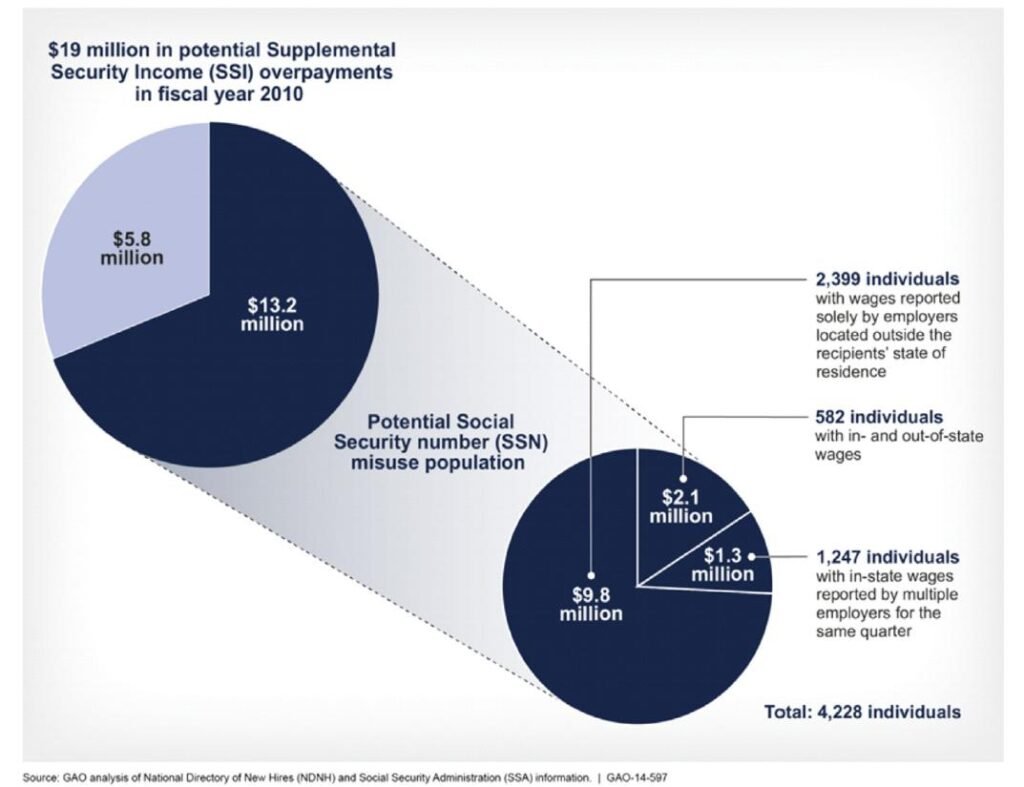
Image source: Wikimedia Commons / U.S. Government Accountability Office from Washington, DC, United States
Don’t give away money or property merely to meet the limit. SSA reviews resource transfers made within the previous five years. Certain trust transfers can create a 10-year restriction.
What Homelessness Changes and What It Doesn’t
Homelessness affects how SSA contacts you and how your housing support is treated. It does not replace the adult disability test, change the $2,000 individual limit, or guarantee payment.
Can you apply without a permanent address?
Yes. You can file while staying in a shelter, outdoors, in temporary housing, or with another person. SSA needs a reliable way to send notices and reach you about your claim.
A shelter address may work if you can safely receive mail there. A relative, friend, care provider, or authorized representative may also be able to provide an address. Choose a phone number and email address that you can check regularly.
A mailing address doesn’t always need to be the place where you sleep. The key is creating a safe, dependable contact system. Tell SSA immediately if that setup changes.
How are shelter and other in-kind benefits treated?
Shelter, meals, housing, or utility support may be offered as in-kind assistance. The counting rule depends on who provides it, why it is provided, and your living arrangement.
For example, a shelter payment made for a specific housing service may receive special treatment. A friend buying your groceries may affect income differently from a housing provider paying a contract.
Don’t assume support is excluded or countable without checking. Report it accurately and ask SSA which rule it is using.
| Living situation | What SSA may need to know |
|---|---|
| Street or vehicle | Safe mailing and contact arrangements |
| Emergency shelter | Shelter address and included services |
| Doubled-up household | Whose name is on the lease or mortgage |
| Transitional housing | Program type and who receives payments |
| Staying with family | Control of money, property, and living expenses |
Our family household rules explain why shared housing doesn’t automatically make someone ineligible. What matters is ownership, access, and who supplies support.
Do you need a representative payee?
Not every homeless person needs one. You may ask for a representative payee if you cannot safely manage money, open mail, or handle benefit reporting.
The representative must use your benefits for your best interests. Our payee change process explains when that option may be available. Never use someone who pressures you to sign over control of the money.
SSI Compared With SSDI, TANF, SNAP, VA Benefits, and Housing Aid
Several programs can support someone experiencing homelessness. Some may reduce SSI, while others are designed to work alongside it.
| Program or benefit | Best for | Effect on SSI |
|---|---|---|
| SSDI | People with sufficient Social Security work credits | May support concurrent benefits |
| TANF | Families receiving state cash assistance | Usually counts as income for at least part of the time |
| SNAP | Buying eligible food | Generally not counted as SSI income |
| VA compensation | Service-connected disability | Generally not counted as SSI income |
| Housing aid | Paying rent or related housing costs | Program counting rules may differ from SSA’s |
| Medicaid | Health-care coverage | Often available through SSI or a separate pathway |
SSI and Social Security Disability Insurance
SSDI relies on work credits rather than current financial need. A person can sometimes receive both SSI and SSDI, but countable SSDI usually reduces or stops SSI under the statutory offset rules.
If you have little work history, SSDI may not be available. Homelessness itself doesn’t create work credits. However, you may still qualify for SSDI if you have enough credits from past work, including certain military service.
TANF, SNAP, and housing assistance
TANF can reduce SSI because it is a needs-based cash payment. SNAP generally doesn’t reduce SSI, although household and immigration rules still matter. Our SNAP access overview covers the basic eligibility picture.
Housing programs use their own definitions of income and household members. A housing agency may count something that SSA excludes from SSI. You may need separate decisions from the housing authority and SSA.
VA disability benefits
VA disability compensation usually doesn’t count as income for SSI. That differs from VA needs-based pension, which can reduce or stop SSI.
Our VA benefit coordination guide explains the difference between the two VA programs. Coordinate any pension choice with SSA and the VA before changing your benefits.
2026 SSI Payment Rates, State Supplements, and Medicaid
SSI is means-tested, so the full federal rate is only the starting point. SSA subtracts countable income, while state programs may add a supplement.
What are the 2026 federal SSI payment amounts?
As of 2026, the basic federal monthly amounts are:
| Claim category | 2026 federal amount |
|---|---|
| Eligible individual | $994 |
| Individual with an essential person | $497 |
| Eligible couple | $1,491 |
These figures come from the 2026 cost-of-living adjustment. The current SSI information from SSA explains the payment rules.
The eligible individual amount is the most common starting point. The lower amount applies when someone else provides the claimant’s food and shelter and SSA recognizes that person as an essential person.
Your actual payment can be $0 or another amount below the standard. Countable income, state supplements, and certain payment arrangements can change the final figure.
How do state supplements work?
Some states provide a State Supplemental Security Income payment. The amount depends on the state, claimant category, living arrangement, and other state rules.
A supplement may help with housing or other costs. State-only payments are separate from the federal SSI decision. Some states also offer General Assistance or other help when SSI is denied.
The federal $2,000 resource limit doesn’t automatically become the asset limit for every state program. A housing agency or state health program may apply a separate test.
Can SSI include payments for earlier months?
Yes, but approval for earlier months is not automatic. SSI may be payable for up to six months before the application date when all eligibility requirements were met.
A valid earlier contact may protect the filing date in some cases. Medical evidence and financial records must still support payment for those months.
Don’t wait while gathering perfect records. Contact SSA promptly so a possible application date isn’t lost.
Does SSI lead to Medicaid?
Receiving SSI usually qualifies an adult for Medicaid through a streamlined federal pathway. State procedures and renewal rules still matter.
If SSI is denied, you can ask your state Medicaid agency to review eligibility separately. High medical expenses may support a Medicaid pathway even when countable income exceeds the SSI limit.
Medicare is a separate program based mainly on age or certain disability rules. If you have both Medicare and limited income, our Medicare Extra Help steps can help with prescription-cost assistance.
How to Apply for SSI Without a Permanent Address
Applying without a fixed address is possible, but you need a safe and dependable way to receive SSA mail. Start as soon as you believe you may qualify. Waiting for medical records or financial documents can hurt your possible payment date.
When should you contact SSA?
Contact SSA as soon as your condition or finances begin meeting the eligibility rules. You can apply online, by phone, or through a local field office when eligible.
A phone call, field office visit, or online submission may protect an earlier application date. That date can matter for retroactive benefits. Make sure SSA records the contact and gives you written confirmation.
If your disability or housing situation is urgent, ask a shelter worker, benefits specialist, or legal-aid provider to help with the call. Don’t let someone else impersonate you. You must approve the application yourself or formally authorize a representative.
What address should you use?
You can use a shelter, transitional housing program, relative’s home, or another safe location. SSA can also accommodate applicants who have no conventional mailing address.
Choose a place where you can receive notices quickly. Tell SSA if you move, lose access to mail, or change phone numbers. Missed notices can delay evidence requests and appeals.
| Situation | Practical mailing option |
|---|---|
| Emergency shelter | The shelter’s program address |
| Doubled-up housing | A host or trusted contact, with permission |
| Outdoors or in a vehicle | Ask SSA about its homeless applicant process |
| Domestic violence | A confidential address or representative |
| Hospital or treatment program | The facility’s mail service, if allowed |
Which SSI forms will you complete?
The application includes medical and financial sections. Common forms include:
| Form | Purpose |
|---|---|
| SSA-16 | Main SSI application |
| SSA-800 | Disability claim |
| SSA-3389 | Adult medical and functioning report |
| SSA-1696 | Authorization for SSA to request records |
If you cannot finish a form because of disability, literacy, language, or access problems, ask for help. SSA can provide an interview and communicate through reasonable accommodations.
How should you prepare for the interview?
Write down your condition, treatment providers, medications, and functional limits. Include when the problem began and how it affects daily activities.
Our interview preparation guide explains the type of questions SSA may ask. Answer honestly and plainly. If you don’t know an answer, say so instead of guessing.
If you miss the interview, request another one promptly. Tell SSA if you need a phone interview, accessible format, interpreter, or different contact time.
Medical, Functional, and Financial Evidence That Supports a Claim
A strong application connects medical records to real functional limits. It also shows exactly what you own, earn, receive, or pay. Organized evidence prevents avoidable delays.
What medical evidence should you collect?
Gather records from doctors, clinics, hospitals, therapists, and other treating providers. Useful evidence includes treatment notes, medication lists, laboratory results, imaging, and diagnoses.
A diagnosis alone rarely proves that you cannot work. The records should explain symptom severity, frequency, treatment, and the medical restrictions placed on you.
Keep copies of everything you submit. If a provider needs time to respond, give SSA the records you already have rather than missing a deadline.
How do you show the impact on daily functioning?
Describe what you can and cannot do. Examples include preparing meals, managing hygiene, shopping, handling money, sleeping, concentrating, or getting to appointments.
A 2019 SSA rule may allow the agency to use the Adult Medical and Functioning Report to clarify how a condition affects daily life. Complete it carefully and accurately.
| Applicant situation | Useful supporting evidence |
|---|---|
| Substance-use disorder | Treatment records, housing loss, and remaining functional limits |
| Chronic pain | Treatment notes, medication effects, and activity restrictions |
| Mental illness | Psychiatric records, crisis treatment, and daily functioning |
| Blindness or vision loss | Eye specialist records and visual acuity findings |
| Developmental disability | Developmental history, adaptive functioning, and work history |
Work attempts can support your account. List each job, approximate earnings, dates, reasons for leaving, and any employer restrictions.
What financial evidence does SSA need?
Provide recent bank statements and clear records of cash, property, vehicles, recurring payments, and lump sums. Include income from work, self-employment, benefits, family support, and selling belongings.
If you have no income, state that plainly. Don’t guess when a payment amount is unclear. Ask the payer for a record if possible.
Report resources you can access, even if someone else holds the title. A car excluded from counting still belongs on the financial application. Our single-person resource guide explains how separate living arrangements affect financial counting.
If SSI Is Denied: Reconsideration, Hearing, and Further Review
A denial doesn’t always end an SSI claim. Most claimants can request reconsideration, and many continue to an administrative law judge hearing. Deadlines are strict, so act quickly.
How do you request reconsideration?
You usually have 60 days from the date shown on the decision notice to request reconsideration. If the notice never arrived, contact SSA immediately and explain when you expected it.
You can request review online, by phone, or in person, depending on your claim. Explain why the decision was wrong. Identify missing records, misinterpreted symptoms, or incorrect medical findings.
| Common reason for appeal | What to identify |
|---|---|
| Medical evidence was missed | Provider name and treatment dates |
| Functional limits were overlooked | Daily activities affected by the condition |
| Financial figures were wrong | Income, resource, or transfer details |
| Identity was not established | Records SSA should review |
| Hearing was not completed | Dates and contact attempts |
Check the SSA appeals guidance or your decision notice for the exact filing method.
What happens if reconsideration does not help?
You can request a hearing before an administrative law judge. Submit Form SSA-44 unless SSA provides another accepted filing method.
The hearing reviews the medical evidence and functional claims. It may also consider past work, work incentives, and whether any treatment was reasonably available.
Prepare a short timeline, a written statement, medical records, and a list of missing evidence. Use witnesses only if they can directly explain your limitations. An attorney or approved non-attorney representative can present your case.
Can you continue after the hearing?
Yes. An adverse hearing decision can go to the Appeals Council. After that review, some claimants may seek federal court review.
These stages have separate deadlines and technical requirements. You generally must finish the administrative process before seeking federal court review. Check each notice instead of assuming you have the same time at every stage.
Legal aid may handle straightforward claims. An experienced benefits attorney may help with complex medical records, work history, or hearing strategy. Don’t wait until the last day to find representation.
SSI Mistakes, Scams, Overpayments, and Ongoing Reporting
Most avoidable SSI problems come from missed notices, incomplete financial reporting, or rushed changes. Check information before acting. A benefit mistake can lead to repayment and interest.
What mistakes can disrupt your claim?
The most serious mistakes include missing interviews, ignoring deadlines, and failing to report money or resources. Also never hide your address or stop answering SSA because you dislike mail.
Report income even when you think a special exclusion applies. Keep proof of any exclusion. Similar rules apply to vehicles, housing support, and large payments.
Don’t transfer money or property to avoid the resource limit. SSA reviews transfers made during the prior five years. Certain trust transfers can trigger a 10-year period.
Our car ownership overview explains why listing a vehicle doesn’t automatically disqualify you. The vehicle’s value, purpose, and ownership structure matter.
What should you do if SSA says you were overpaid?
Read the overpayment notice before responding. Check whether the amount, payment months, and reason are correct.
You can challenge the overpayment and request a waiver when the law allows. A pending appeal may not stop recovery, so don’t ignore the payment issue. Ask about withholding or repayment protection during the review.
An overpayment isn’t automatically fraud. If you knowingly withheld information, additional penalties may apply. Get qualified help if you disagree with the evidence.
What changes must you report?
Report new or lost income, savings, vehicles, property, or payments. Update SSA when your address, phone number, household, or representative payee changes.
Also report work activity, leaving the country for a long stay, marriage, or other events affecting eligibility. Keep copies of every report.
When mail doesn’t arrive, contact SSA at once. Our payee change guidance also covers keeping contact information current.
How do you spot an SSI scam?
SSA doesn’t charge a fee to apply for benefits. No agency can guarantee approval or demand payment to release SSI money.
Never give a stranger your Social Security number, bank password, or one-time login code. Be especially careful with anyone requesting gift cards, cryptocurrency, wire transfers, or a fee.
Verify requests through SSA.gov or a local SSA field office. If safety is at risk, ask a shelter, legal-aid office, or trusted benefits counselor to verify the contact with you.
FAQs About SSI for Homeless Adults in 2026
Does a homeless person automatically qualify for SSI?
No. Homeless status doesn’t replace SSA’s disability, income, or resource tests. Most adults also need a medically determined impairment expected to last at least 12 months.
Having little income helps with the means test, but it doesn’t establish a qualifying disability. Apply promptly and document both your condition and finances.
Can I apply for SSI if I have no fixed address?
Yes. You can apply while unsheltered, staying in a shelter, using transitional housing, or temporarily living with another person. Provide a safe mailing address and reliable phone or email where possible.
Update SSA whenever your contact details change so you don’t miss medical requests, decisions, or appeal deadlines.
Can I receive SSI if I have no income?
Possibly. Having no countable income can leave you eligible for the full federal payment if you meet the disability and resource rules. Zero income alone does not establish eligibility.
You still need qualifying medical evidence and must satisfy SSA’s work, income, and countable-resource tests.
How much money can I have while receiving SSI?
You generally can have up to $2,000 in countable resources as an eligible individual. An eligible couple generally has a $3,000 limit. Excluded items, such as a primary residence or a qualifying vehicle, don’t count toward those totals.
Knowable assets can still affect eligibility even when the cash balance remains low.
Will receiving SSI stop my SNAP or housing benefits?
Usually not. SNAP generally doesn’t count as SSI income, though eligibility for both depends on your state. Housing programs may use different income rules.
Concurrent SSDI can reduce SSI, and choosing VA needs-based pension can affect it too. Ask each agency how your benefits interact before making a change.