
Disability Benefits for Adults With Developmental Disabilities can include SSI, SSDI, Medicaid, and state services, but a diagnosis alone doesn’t decide the outcome. The right route depends on work history, income, resources, daily function, and where you live. Missing one program can also mean missing health coverage or long-term supports.
Adults should expect SSA to look beyond the diagnostic label and ask whether the limitations are medically established and severe enough to meet its definition of disability. For SSI and SSDI, that generally means a medically determinable impairment expected to last at least 12 months, though special rules can apply. Here’s how the programs differ and how to build an evidence-backed application.

Disability Benefits for Adults With Developmental Disabilities
Quick Answer
Disability benefits for adults with developmental disabilities depend on more than a diagnosis. Adults may qualify for SSI, SSDI, Medicaid, Medicare, and state services. SSI reviews disability, income, and resources.
SSDI reviews disability and work credits. Each program has separate rules and evidence.
Which program should you apply for first?
Start with the program that matches your work and financial situation. You may qualify for more than one.
- Apply for SSI if you have limited income and resources. You don’t need a work history.
- Apply for SSDI if you’ve built enough Social Security work credits through employment or self-employment.
- Consider both if your work history and finances may qualify you for either program.
- Apply for Medicaid if you need health coverage or qualify for home- and community-based services.
- Contact your state agency if you need developmental disability services, supported employment, or help with daily activities.
A developmental disability diagnosis doesn’t automatically meet SSA’s definition of disability. SSA must connect the diagnosis to medically established limitations. Those limitations must affect work-related activities with enough severity to qualify.
As of 2026, the monthly Substantial Gainal Activity amount for a non-blind disabled worker is $1,600. Earnings at or above that monthly amount generally count as work, though exceptions apply when earnings fluctuate because of disability-related limitations.
How SSA Evaluates Developmental Disabilities for SSI and SSDI
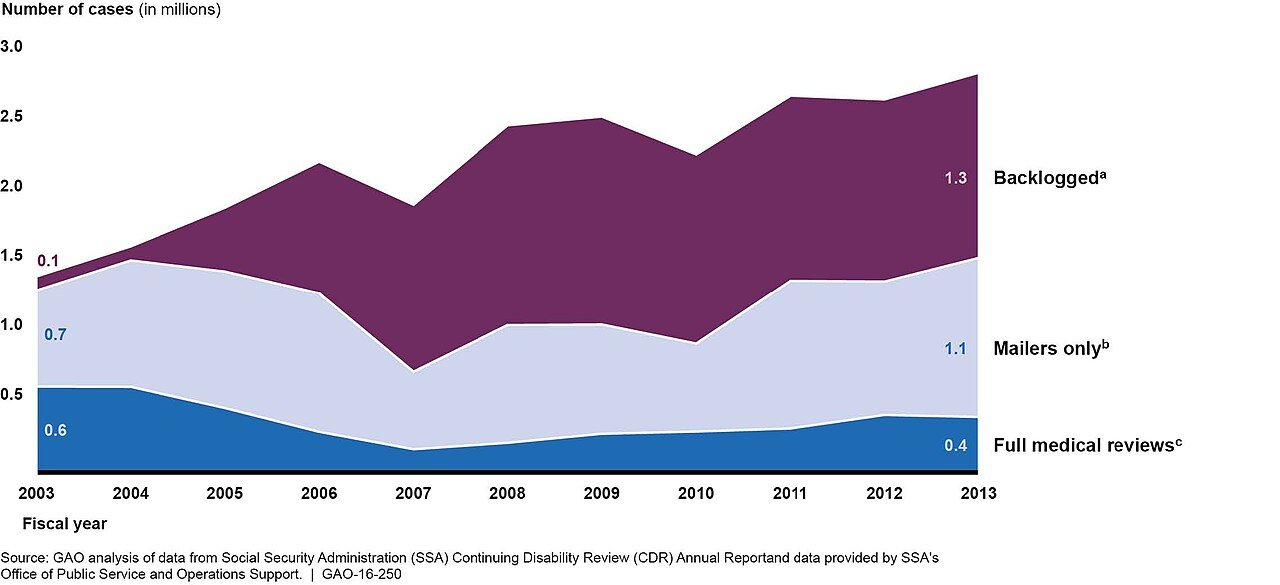
Image source: Wikimedia Commons / U.S. Government Accountability Office from Washington, DC, United States
SSA uses the framework in its official disability overview to decide whether an adult has a qualifying impairment. It considers the medical evidence, daily functioning, work history, and ability to perform sustained work activity.
Some claims are evaluated under a specific medical listing, including Listing 12.05 for intellectual disorders. Other claims need a broader assessment because the diagnosis or symptoms may not fit one listing exactly.
The key issue is often function. For example, an adult may need help managing money, following a work schedule, communicating instructions, or completing a multi-step task. A provider’s diagnosis is useful, but SSA also needs evidence explaining how those limitations affect daily life and work.
Image source: Wikimedia Commons / U.S. Government Accountability Office from Washington, DC, United States
Many cases move beyond a medical listing. SSA then evaluates treatment history, symptom frequency, daily functioning, and the ability to perform work at different levels.
Residual functional capacity, often shortened to RFC, is SSA’s estimate of what a person can still do despite the limitations. This analysis considers physical tasks, mental tasks, communication, decision-making, social functioning, and sustained work demands.
How does work history affect the decision?
SSDI depends heavily on your Social Security earnings record. Most claimants need 40 credits, though younger workers with a qualifying disability may qualify with fewer.
Countable work usually means Social Security reported taxable earnings, including covered wages or self-employment income. Unreported work can also affect eligibility, and benefits may be withheld while SSA investigates it.
If your statement shows missing credits, review your earnings record before applying. Correct records matter for SSDI eligibility and the monthly benefit calculation.
SSI does not require work credits. An adult with no employment history can still qualify if the medical, functional, and financial rules are met.
What can prove ongoing functional limitations?
Strong evidence usually describes specific tasks, not general statements. It should explain:
- What the person cannot easily do
- How often the problem occurs
- How much help or supervision is needed
- Whether the limitation affects home, community, and work settings
- When the limitation began and whether it has continued
- Which treatments, supports, or accommodations help
Early intervention reports, school evaluations, adaptive behavior assessments, medical records, and caregiver statements may all help. They don’t need to exist for the same number of years, but they should form a consistent account that fits with the claimed onset date.
SSI vs. SSDI vs. Medicaid, Medicare, and State Services
SSI and SSDI provide monthly cash benefits. Medicaid and Medicare mainly provide health coverage. State services can fund daily supports, employment help, home modifications, and long-term care.
| Program | Main eligibility rule | What it may provide | Best fit |
|---|---|---|---|
| SSI | Disabled, with limited income and resources | Monthly cash and usually Medicaid | Adults with little or no work history |
| SSDI | Disabled and insured through Social Security | Monthly cash based on earnings | Adults with sufficient work credits |
| Medicaid | State disability and financial rules | Health care and long-term supports | People needing medical or daily-assistance coverage |
| Medicare | Disability entitlement, age, or other federal rules | Part A and Part B health coverage | Most SSDI beneficiaries after the waiting period |
| State services | State developmental disability rules | HCBS, supported employment, respite, and assistance | Adults whose needs aren’t covered by cash benefits |

Image source: Wikimedia Commons / Amy Cridge
As of 2026, the federal monthly SSI maximum is $1,022 for an eligible individual and $1,533 for an eligible couple. Some states also pay a state SSI supplement, but the amount and eligibility rules vary.
An individual generally faces a $2,000 federal SSI resource limit, while a couple generally faces $3,000. Not every asset counts. Some income and resources are excluded under SSA rules.
Can you receive more than one benefit?
Yes. A person may receive SSDI and SSI concurrently, but SSI usually tops the SSDI payment up to zero. State supplements or certain overpayment arrangements can affect the final amount.
A person may also have SSI and Medicaid at the same time. Medicare usually requires 24 months of SSDI entitlement before Medicare Part A and Part B begin, although other Medicare pathways exist.
Medicaid can also cover services SSI and SSDI don’t pay for. CMS explains Medicaid and long-term services and the role of state-managed programs.
If health coverage is the immediate concern, review Medicare Extra Help enrollment. People with limited income and resources may qualify for help with Medicare premiums and drug costs.
Lower-income beneficiaries may also qualify for prescription assistance. State HCBS waivers may fund personal assistance, supported living, home modifications, and respite care.
Waiver access depends on state rules, eligibility, funding, and waiting lists. A waiver isn’t automatically available merely because an adult has a developmental disability.
Building Evidence That Shows Your Real Functional Limitations
A strong evidence file answers a simple question: How do the diagnosed conditions affect the person’s ability to work and live independently? It uses dated records, specific examples, and consistent descriptions.
A diagnosis-only note can help establish the medical condition. It may not, by itself, explain the person’s expected limitations or their effect on work.
What belongs in the evidence file?
Include records that show the medical condition, functional impact, treatment history, and work restrictions. Early developmental records can add useful background.
| Evidence type | Details to preserve | Why it helps |
|---|---|---|
| Medical records | Diagnoses, symptoms, treatment, medications, and dates | Establishes medically determinable impairments |
| Functional evidence | Tasks needing help, supervision, time, or repetition | Shows how limitations affect daily life |
| Developmental records | School evaluations, early intervention, and adaptive testing | May document the condition’s history and onset |
| Work records | Paystubs, tax forms, schedules, job duties, and accommodations | Helps evaluate earnings and work capacity |
| Financial records | Income, housing, expenses, and countable resources | Supports the financial part of an SSI or Medicaid claim |
For every major limitation, describe what happened and what changed. Record whether the person can follow instructions, handle money, use public transportation, remain on task, communicate, or work consistently.
Don’t rely on phrases such as “unable to work” without examples. Better evidence says the person cannot reliably complete a specific task without supervision. It may also explain the frequency and duration of that limitation.
Can childhood records help an adult application?
Yes. School and early intervention records may help SSA understand developmental history and the likely onset of impairment.
A school record can’t prove that an adult can’t work today, but it can support the timeline. Pair it with current medical and functional evidence so the application isn’t based on outdated assumptions alone.
Keep copies of every record before sending it. Ask each provider or school for complete records, including findings, test scores, summaries, and supplemental reports.
Use consent releases carefully because medical and school records contain private information. Share only what the application process requires.
If you receive SSI, household arrangements can affect eligibility calculations. Review family housing rules before reporting where you sleep, who assists you, and how expenses are handled.
Be accurate even when the application is stressful. Contradictory descriptions, missing appointments, or evidence that conflicts with earlier records can delay the claim. Clarify those points with dated records and provider statements.
Step-by-Step: Apply for Benefits and Track the Claim
What is the safest way to move from preparation to a decision?
Build the evidence first, submit one complete application, answer follow-up requests quickly, and track every notice. This process reduces avoidable delays and missing information.
Map the benefits you may need. Identify whether the priority is cash, health care, daily supports, or employment services. Some people need SSI, SSDI, Medicaid, and state programs together.
Create one document list. Gather medical records, school records, financial information, housing details, work history, identification, and provider contact details. Review the forms for missing pages or conflicting dates.
Complete the correct application. SSA allows disability applications online, by phone, and through a field office. Make sure the application clearly includes the conditions causing functional limitations.
Prepare for the disability interview. Expect questions about daily tasks, symptoms, treatment, school, work, and finances. Our interview preparation guide can help you organize clear, consistent answers.
Respond to every Evidence Development request. SSA may contact you, your doctors, schools, former employers, and other sources. Review request forms for errors and confirm that appointments can be completed.
Track the claim yourself. Create a My Social Security account and check the Social Security Claims Record. Record the claim number, filing date, examiner requests, and deadlines in one place.
Treat an adverse decision as a deadline. A benefits notice usually gives 60 days to request SSA reconsideration. A Medicaid notice starts a separate state appeal process with its own deadline.
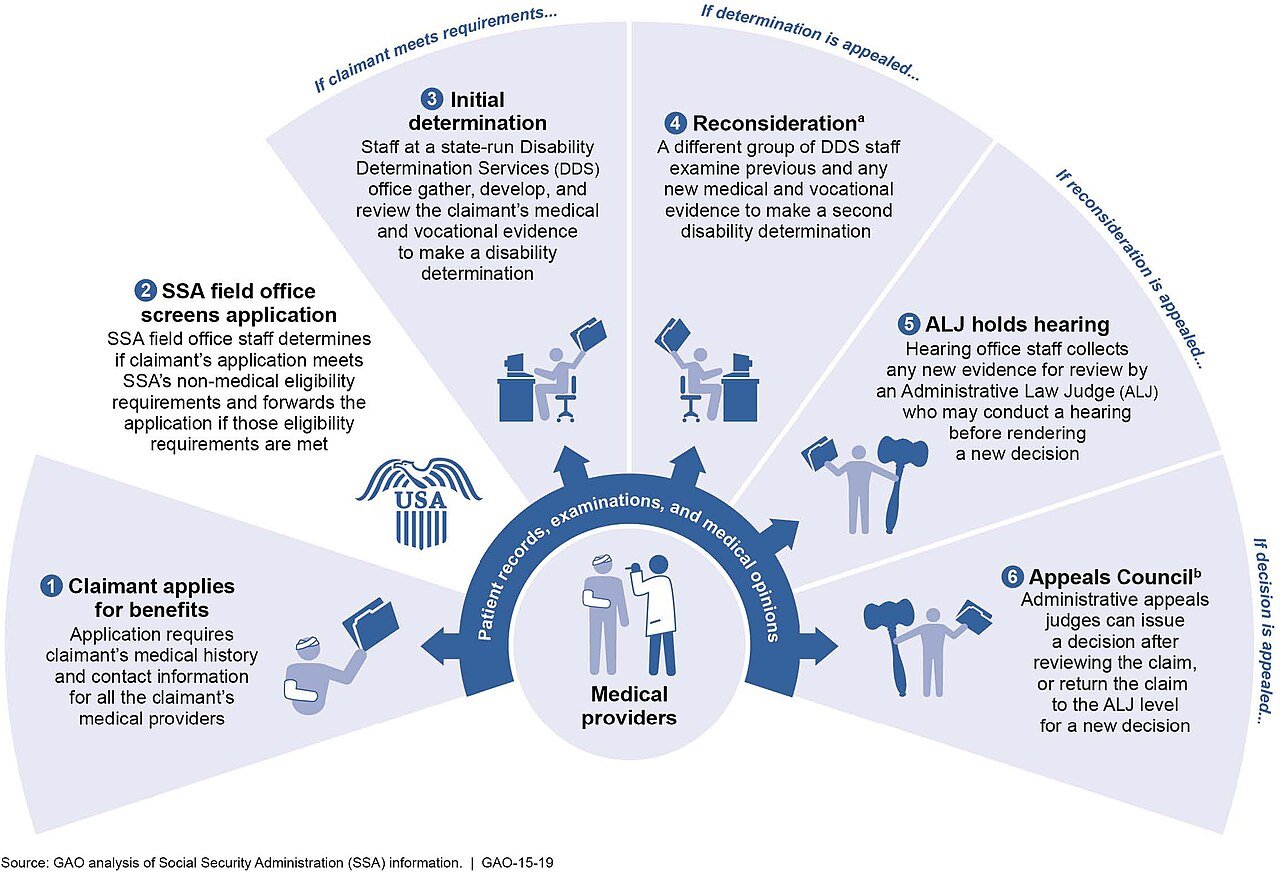
Image source: Wikimedia Commons / U.S. Government Accountability Office from Washington, DC, United States
After filing, use the official appeal status tracker. Keep copies of every letter, and confirm that SSA received it.
- Coordinate coverage and ongoing reporting. If approved, complete Medicare or Medicaid enrollment promptly. Report required changes in address, income, resources, work, and living arrangements.
If someone manages benefits for you, clarify their role before payment begins. A representative payee request should be handled separately from the disability claim, because SSA carefully reviews the person’s ability to manage money.
If Denied: Request Reconsideration and Prepare for an Appeal
An SSA denial isn’t the final word. If you act quickly, you can challenge the decision and add evidence that wasn’t available or properly considered during the initial review.
The usual path has four stages:
| Stage | What happens | Practical response |
|---|---|---|
| Reconsideration | A new SSA reviewer examines the claim | Submit corrections and supporting records |
| Administrative law judge hearing | A judge holds a hearing and issues a decision | Present the medical and functional case |
| Appeals Council review | The council reviews the hearing decision | Request review within the stated deadline |
| Federal court | A lawsuit is filed in federal district court | Obtain qualified legal representation |
How quickly can you challenge an SSA denial?
You generally have 60 calendar days from the date on the decision letter to request reconsideration. If you can’t finish the appeal by then, submit the request anyway and explain that more evidence is coming.
Missing this deadline may prevent a normal appeal. SSA does allow limited reopening in certain situations, but those rules are narrow. Contact SSA or a qualified benefits counselor the same week you receive the decision.
What should you do before filing?
Read the denial reasons closely. They might identify a missing medical condition, inconsistent functional statements, a work-history problem, or insufficient evidence of expected duration.
Correct the problem directly. The SSA appeals guide explains each review stage and the documents SSA expects.
Your submission should include:
- A short statement identifying each incorrect finding
- Medical records and provider contact information
- School and developmental assessments
- Functional examples tied to real daily tasks
- A clear work history
- Any evidence SSA said it requested but never received
- A request for the documents SSA already holds
Don’t send another undated medical summary without a statement of function. Diagnoses, treatments, and limitations need to connect clearly.
Should you use a representative?
You can represent yourself, but a trained representative can help organize evidence and prepare questions for a hearing. Non-attorney representatives must meet SSA’s authorization rules before representing a claimant.
Use an attorney or an authorized non-attorney representative. Be cautious with anyone who promises approval, pressures you, or asks you to pay a large upfront fee.
SSA can schedule an expedited appeal for certain timely termination cases. That process has short deadlines, so contact SSA promptly if benefits are about to end.
Medicaid decisions have a separate appeal process. Follow the state notice even when the same evidence supports both claims.
Returning to Work Without Causing an Unexpected Benefit Drop
No, starting work or increasing hours doesn’t automatically cancel SSI or SSDI. It can change how benefits are calculated, and some programs use work incentives to keep coverage in place.
How does a Trial Work Period protect SSI?
A Trial Work Period gives a beneficiary up to nine months during a 60-month period when earnings won’t produce an SSI cash payment. The months don’t need to be consecutive.
For 2026, the monthly Trial Work Period amount for a non-blind beneficiary is $1,280. This is 80% of the $1,600 monthly Substantial Gainal Activity amount.
Countable work usually happens after the ninth month. The remaining Trial Work Period earnings exclusion is $1,280. It is also any other income that SSA proves relates to the impairment.
After the exclusion is used, SSI may still continue at a reduced amount. A work incentive plan can also protect some cash and health coverage when substantial earnings begin.
What should you check before changing hours?
First, ask SSA how the proposed schedule will affect SSI. Then ask your state whether Medicaid or an HCBS waiver will continue.
Review the answer before beginning the job. An approved SSI work plan won’t automatically preserve every state-funded service.
SSA’s work incentives guidance explains Trial Work Periods, the Ticket to Work, and help for people who lose cash benefits because of earnings.
If work is the reason SSI ends, a state may offer health coverage through the section 1619 continuation program. Eligibility, premiums, and covered services vary by state.
Does every dollar earned need manual reporting?
Report earnings as required, even if the employer files a Form W-2. Voluntary reporting helps prevent underpayments and unnecessary benefit reviews.
Keep your schedule, gross pay, deductions, and any employer assistance. Screenshot or save monthly pay records.
If earnings fluctuate, don’t assume that every month counts the same. Disability-related variations can affect benefit calculations, but you need records to show that pattern.
Managing Long-Term Supports, Payees, Overpayments, and Legal Risks
Long-term benefits require active management. Cash, health care, daily assistance, and money management involve different rules.
What can a representative payee do?
A representative payee receives and manages benefits for someone SSA finds unable to handle the funds. The role doesn’t make that person a court-appointed guardian.
A payee must use benefits for the beneficiary’s best interest. They must keep records, provide an accounting when asked, and follow SSA instructions. They can’t simply keep money for themselves.
SSA oversight doesn’t remove the risk of exploitation. Review statements and ask questions about unusual spending, borrowing, or missing receipts.
If the current arrangement isn’t working, request a payee review or change. The payee change guidance explains when SSA may appoint someone else.
Supported decision-making, a family caregiver, and a court-appointed guardian are separate arrangements. Don’t assume one automatically controls the others.
What happens if SSA says you were overpaid?
First, check whether the calculation is correct. Benefit changes, delayed records, and unreported work can create errors. An SSA or state error isn’t automatically your responsibility to repay.
If the overpayment is correct, you can appeal. You can also ask SSA to consider repayment based on your income, expenses, and ability to repay.
Collections may continue while an SSA appeal is pending. Don’t ignore the notice because you’ve filed paperwork.
What legal risks accompany long-term services?
Medicaid HCBS waiver services can require long-term planning. A state may seek estate recovery after a recipient dies, often through a claim against property.
Rules differ widely. Some states protect a spouse, home, or unpaid caregiver under specific conditions. Review moving-state SSI rules because moving can also trigger a new Medicaid determination.
An ABLE account may help eligible people save without putting essential needs at immediate risk. Generally, the disability must have begun before age 26, and the person must meet SSA’s disability criteria. State rules and annual limits apply.
Real Scenarios: Which Benefits and Services May Fit?
Consider these common situations. They show how work history, finances, health needs, and current services change the likely route.
An adult with no work history
A 23-year-old has intellectual and developmental disabilities, epilepsy, and limited monthly income. They live with family and receive some help with transportation and meals.
SSI and Medicaid deserve prompt review. Limited work history doesn’t block an SSI application, and the family home doesn’t automatically make the person ineligible. Family household rules require careful reporting.
Review family household rules before the interview.
If daily needs exceed available support, check the state’s developmental disability and HCBS waiting lists.
A worker with enough Social Security credits
A 47-year-old has eight years of payroll work. A chronic health condition has reduced their ability to stay on task, and earnings have fallen sharply.
SSDI is the main federal cash program to assess. The individual may not qualify for SSI because of income, even if SSA finds the work-related disability. Medicaid may still be available, and Medicare begins after 24 months of SSDI entitlement.
A state SSI supplement generally requires SSI, not SSDI alone. A state SSI supplement generally requires SSI, not SSDI alone.
An SSI recipient starting supported employment
A 34-year-old receives SSI and begins supported employment. The schedule is 10 hours per week at $20 per hour, or about $1,040 in monthly gross wages.
The schedule can count toward the nine Trial Work Period months. Wages must be reported, but the person may retain SSI and health coverage. Ask SSA and the state about the new work before the first payroll.
A person denied for missing evidence
A 40-year-old receives a denial because no current medical-source findings address concentration, memory, and task completion.
The person should request reconsideration within 60 days. They must attend any requested examination and submit records showing treatment, limitations, frequency, and work impact. Medicaid benefits require a separate appeal if the state denied coverage.
FAQs About Disability Benefits for Adults With Developmental Disabilities
Can I receive both SSI and SSDI?
Yes, some adults receive both benefits. SSDI comes from eligible Social Security work credits, while SSI depends on disability, income, and resources. When both programs apply, SSI usually tops up the SSDI payment to the federal SSI amount.
A state supplement may change the final total.
Does a developmental disability diagnosis guarantee benefits?
No, a diagnosis alone doesn’t guarantee SSI, SSDI, or Medicaid. SSA evaluates the medical evidence, expected duration, functional limitations, and work capacity. SSI and Medicaid also involve separate financial tests.
Current records must connect the condition to specific limitations in daily life and work.
Can I get SSI without a work history?
Yes, SSI doesn’t require Social Security work credits. Adults with little or no earnings may qualify if they meet the disability, income, and resource rules. Apply even if past employment wasn’t reported for tax purposes.
Unreported work can complicate the claim, so explain the full work history accurately.
Will working stop SSI or SSDI?
No, work doesn’t automatically stop either benefit. SSI includes Trial Work Period and other work incentives. SSDI rules depend on the person’s work and the medical evidence at the time.
Ask SSA and the state about cash benefits, Medicaid, and waiver services before changing your schedule.
Does living with family make me ineligible for SSI?
No, living with family doesn’t automatically disqualify you. SSA considers the household arrangement, whether you pay rent or share expenses, and any food, housing, or support provided by others. Some contributions count as in-kind income.
Apply if you need and qualify, but report the living arrangement carefully.
Can family members manage my benefits?
Yes, but the arrangement must follow the proper legal process. SSA appoints a representative payee for money management. A guardian, power of attorney, or caregiver has different authority under state law.
Ask about supported decision-making if the goal is help without unnecessary loss of control.



Pingback: SSI Eligibility for Homeless Adults in 2026 - OMAGOUS