
Getting your SSI disability interview questions and answers right can decide whether your claim moves forward or stalls for months. The Supplemental Security Income (SSI) interview is a fact-finding conversation with the Social Security Administration (SSA), not a casual chat. Every answer you give becomes part of your official claim record.
One careless detail about your bank balance or your rent can trigger a denial you never saw coming.
SSI is a needs-based program run under Title XVI of the Social Security Act. It comes with strict income and resource limits that SSA publishes and updates. As of 2026, those limits apply to every applicant in the country, regardless of state.
Knowing what the interviewer is really asking, and why, is the difference between a clean claim and a two-year appeal.
Quick Answer
The SSI disability interview is a required step in your claim. An SSA claims specialist asks about income, resources, and living arrangements. A DDS examiner reviews your medical and functional limits.
Honest, specific, consistent answers keep your claim moving. Vague or conflicting answers cause delays and denials.
Why Getting SSI Disability Interview Questions and Answers Right Changes Everything
What the SSI Interview Is, and What It Is Not
The SSI interview is a structured fact-finding session. It is not a test you can cram for, and it is not a negotiation. An SSA claims specialist walks through your application line by line.
They ask about your money, your household, and your daily life.
What it is not: a medical exam. The person asking questions is often not a doctor. They are collecting facts that a disability examiner will weigh later.
Treat it as a records check with a human voice attached.
There are two interviews in most SSI claims. The first covers non-medical rules like income and resources. The second, handled by Disability Determination Services (DDS), digs into your medical and functional limits.
Miss either one and your claim can be denied for failure to cooperate.
How Wrong Answers Can Cause Denial, Delay, or Overpayment
Wrong answers rarely mean you lied. Most mistakes come from guessing. If you tell an interviewer you "sometimes" drive, but your medical records say you cannot lift your arms, that gap gets noticed.
Denials based on non-medical rules are common. SSA can deny you for having too much in the bank, or for receiving free rent from a relative. Those are not medical decisions.
They are math decisions.
Overpayments are the quieter risk. If SSA pays you based on incomplete information and later learns the truth, they can demand the money back. That debt can follow you for years.
Why SSA and DDS Treat This as a High-Stakes Fact-Finding Step
SSA is legally required to verify eligibility before paying benefits. The agency answers to federal auditors and its own Office of Inspector General. That pressure flows straight down to your interview.
DDS examiners use your answers to build a Residual Functional Capacity (RFC) assessment. Your RFC is the single most important document in most disability claims. It lists what you can still do, hour by hour, in a workday.
In our review of SSA guidance, the message is consistent. Specific, dated, consistent answers carry far more weight than dramatic ones. You are building a record, not telling a story.
Who Conducts the SSI Interview and What SSA and DDS Are Actually Looking For
SSA Claims Specialist vs. DDS Disability Examiner
Two different people will question you. Understanding each role helps you answer well.
The SSA claims specialist handles non-medical eligibility. They confirm your identity, citizenship, living arrangement, income, and resources. They also screen you for presumptive disability payments in severe cases.
The DDS disability examiner handles medical eligibility. They review your medical records and your function reports. They decide whether your condition meets a Listing of Impairments or prevents substantial work.
Both roles write down what you say. Neither one is your advocate. Be polite, be precise, and do not volunteer theories about your diagnosis.
Phone, In-Person, and Rescheduled SSI Interviews
SSA conducts SSI interviews by phone, in person at a field office, or occasionally by video. Phone interviews became the default for many claims and remain common.
If you choose a phone interview, find a quiet room with stable service. Background noise and dropped calls lead to garbled notes. That hurts you later.
In-person interviews let you bring documents and hand them over directly. If your case is complicated, an in-person visit is often worth the trip. You can reschedule once without penalty if the timing truly does not work.
The Sequential Evaluation Process and Non-Medical Eligibility
SSA evaluates disability claims in a fixed sequence. You must clear the non-medical steps before anyone looks at your medical file.
Step one is the earnings test. Step two is severity. Step three compares your condition to the Listing of Impairments.
Steps four and five cover past work and other jobs you could still do.
Alongside that, SSI runs its own gate. Your income must fall below the limit, and your resources must stay under the cap. Fail either gate and the medical review never starts.
You can read the full rules at SSA's official site, which publishes the current federal benefit rate each year.
Non-Medical SSI Interview Questions: Income, Resources, Living Arrangements, and Deeming
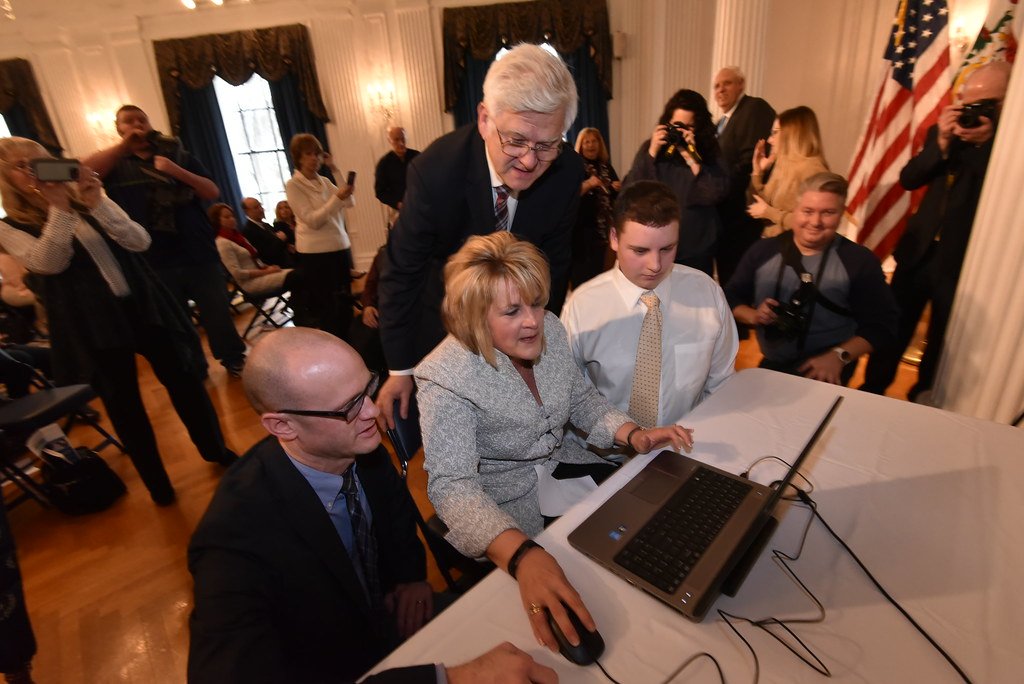
Image source: Openverse / GovJustice (PDM 1.0)
Wages, Self-Employment, Pensions, VA Benefits, and Other Income
The interviewer will list every possible income source out loud. Do not wait to be asked. Volunteer anything that puts money in your hands.
Countable income includes wages, self-employment profit, unemployment, workers' compensation, pensions, and VA benefits. Gifts and loans can count too, depending on how they are used.
If you are self-employed, SSA looks at net profit, not gross. Bring receipts for business expenses. Without them, SSA assumes a higher profit than you actually earned.
Bank Accounts, Vehicles, Life Insurance, Burial Funds, and Trusts
Resources are things you own, not money you receive. SSA counts cash, checking, savings, certificates of deposit, stocks, and bonds.
| Resource type | How SSA treats it | Key detail |
|---|---|---|
| Cash and bank accounts | Counts fully | Applied against the individual or couple cap |
| Home you live in | Excluded | No value limit |
| One vehicle | Usually excluded | Extra vehicles may count |
| Life insurance | Counts above $1,500 face value | Burial funds have separate exclusions |
| Trusts | Depends on the trust | Even a trust you cannot touch may count |
The individual resource cap has sat at $2,000 for decades, with $3,000 for couples. The federal benefit rate, by contrast, adjusts every January. Check the current figures before your interview.
Rent, Mortgage, Utilities, Household Size, and In-Kind Support and Maintenance
This is where most people get surprised. If someone else pays your rent or buys your food, SSA calls it in-kind support and maintenance (ISM). ISM can reduce your monthly SSI payment.
Answer honestly about who pays what. SSA will ask whether you contribute your fair share of household costs. Bring your lease, utility bills, or a written statement from whoever you live with.
Living with family is fine. Not reporting it is not.
Spouse and Parent Income: SSI Deeming Rules
If you are married, part of your spouse's income may be "deemed" to you. Not all of it counts. SSA subtracts allowances before doing the math.
For a child under 18, a parent's income and resources are deemed to the child. That means a working parent can disqualify a child on finances alone.
Deeming rules are detailed and unforgiving. If your household income is near the line, get help from a legal aid office before the interview.
Medical and Functional SSI Interview Questions: Symptoms, Medications, ADLs, and Work History
Diagnoses, Treatments, Hospital Visits, and Medication Side Effects
The examiner wants names, dates, and frequencies. "I see a cardiologist" is weak. "I saw Dr.
Patel on March 4 and again on June 12" is strong.
List every medication, the dose, and what it does to you. Side effects matter as much as symptoms. Drowsiness, dizziness, and nausea can limit work just as much as pain.
Hospitalizations and ER visits are powerful evidence. Give the dates and the reason for each visit.
Pain, Fatigue, Memory, Focus, and Mental Health Symptoms
Describe your worst days, then describe how often they happen. SSA needs frequency and duration, not adjectives.
"I have pain" tells them nothing. "I can sit for 20 minutes before I have to lie down, and that happens four or five times a day" gives them something to measure.
For mental health conditions, talk about focus, memory, and getting along with people. Those are the exact categories in the SSA function reports.
Activities of Daily Living and Function Report Questions
SSA's Function Report (Form SSA-3380) asks about your daily routine. The interview will echo those questions.
Expect to describe cooking, cleaning, shopping, driving, paying bills, and socializing. Be honest about what you have stopped doing, and say why.
Do not claim you do nothing. That reads as exaggerated. Describe the help you need and how often you need it.
Work History, Job Duties, Accommodations, and Reasons for Stopping Work
The Work History Report (Form SSA-3369) covers your last 15 years of work. The interviewer will ask about hours, pay, and physical demands.
Explain why each job ended. Medical reasons should be stated plainly, with a date. If you were fired, say so.
Hiding it looks worse.
If your employer gave you accommodations, mention them. Special equipment or a reduced schedule shows how hard you tried to keep working.
High-Risk Mistakes in SSI Disability Interviews: Inconsistency, Missing Records, and ISM Traps
Vague Answers, Guessing, and Contradicting Your Forms
Guessing is the number one interview killer. If you do not remember, say you do not remember. Then offer to look it up and call back.
Your answers must match your written forms. Read your SSA-3368 and SSA-3380 before the interview. Keep them in front of you during a phone call.
Small contradictions get flagged. A different date of onset or a different list of medications can trigger a re-review of your whole file.
Downplaying or Overstating Symptoms
Downplaying is common, especially for people who were raised to push through. If you mow the lawn once a month, say so, then explain that you pay for it with two days in bed.
Overstating backfires just as badly. Surveillance, social media, and conflicting medical notes all get used against claimants.
The safe path is the middle one. Report your average day and your worst day, and let the records do the rest.
Missing Medical Records, Treatment Gaps, and No Treating Doctor
DDS builds its decision on records. If you have no treating doctor, they may send you to a Consultative Examination (CE). A one-time CE opinion usually carries less weight than a long treatment history.
Treatment gaps raise questions. If you stopped going to the doctor, explain why. No insurance, no transportation, and no money are all legitimate reasons.
Bring a list of every provider, clinic, and hospital you have seen. Include addresses and dates of treatment. That single page can save weeks.
Confusing SSI with SSDI, Medicaid, SNAP, or VA Benefits
SSI and SSDI are different programs with different rules. SSDI is based on work credits. SSI is based on financial need.
Many people qualify for both, which is called a concurrent claim.
Medicaid usually comes with SSI, but it is a separate state program. SNAP and VA benefits have their own applications and their own income tests.
Mixing them up in an interview creates confusion. Confusion creates delays. Say clearly which program you are asking about, and let the interviewer sort out the rest.
How to Prepare for an SSI Phone or In-Person Interview: Documents, Scripts, and Accommodations
Preparation beats memorization. You cannot script a whole interview, and you should not try. What you can do is gather your facts, organize them, and keep them in front of you.
Start at least a week early. Pull your forms, your bank statements, and your medication list. Build one folder you can grab in seconds.
Documents to Gather Before the Interview
Bring originals when you attend in person. Keep photocopies for yourself.
| Document | Why SSA wants it | Notes |
|---|---|---|
| Photo ID and Social Security card | Confirms identity | Required for every claim |
| Birth certificate or immigration papers | Confirms citizenship or status | Bring originals if possible |
| Bank statements, last 3 months | Verifies resources | Include all accounts |
| Pay stubs or tax return | Verifies income | Self-employed filers need receipts |
| Lease or mortgage statement | Verifies living arrangement | Helps with ISM questions |
| Medication list with doses | Supports medical claim | Include side effects |
| Provider list with dates | Speeds up DDS review | Names, addresses, visit dates |
How to Organize Medical, Income, and Resource Information
Write a one-page timeline of your condition. Start with your diagnosis date and list every treatment since. Keep it chronological and factual.
Make a second page for money. List every income source and every account balance as of the date you applied. Update it the morning of your interview.
Keep both pages beside the phone. Reading from your own notes is fine. SSA expects you to check details.
Interpreter Services, Disability Accommodations, and Phone Reliability
SSA provides free interpreter services in many languages. Request one when you schedule the interview, not on the day.
You can also ask for accommodations if you have hearing, vision, or cognitive limits. Ask for a longer appointment or a written summary afterward.
For phone interviews, use a landline if you have one. If you rely on a cell, stay near a window and charge the battery first. A dropped call can end your interview early.
What to Do If You Miss or Need to Reschedule the Interview
Call SSA the same day if you miss the appointment. SSA sends a notice before canceling a claim for failure to cooperate. Respond to that notice immediately.
You can reschedule for good cause. Illness, a funeral, or a transportation failure usually qualifies. Keep a record of who you spoke with and when.
If you move, report the new address right away. Missed mail is one of the most common reasons claims die quietly.
Sample SSI Disability Interview Questions and Answers: What to Say and What to Avoid
How do you get through a typical day?
The interviewer wants a realistic picture of your routine. Describe your morning, afternoon, and evening in plain terms.
Say something like: "I wake around 9, take my pills, and sit for about 20 minutes before the dizziness passes. I usually manage a sandwich at noon. By 3, I have to lie down."
Avoid: "I just try to get by." That answer gives the examiner nothing to work with.
Can you lift, stand, walk, and sit for long periods?
Answer with minutes and hours, not feelings. SSA needs numbers to build your RFC.
Say: "I can stand about 10 minutes before my back spasms. I can sit for 30 minutes, then I need to move. I walk to the mailbox and back, maybe 100 feet."
Avoid: "It depends on the day." Follow that with how many good days you get each week.
What happens on a bad day?
Bad days show the true severity of your condition. Describe one in specific detail.
Say: "Twice a week I wake up with a migraine. I cannot handle light or sound. I stay in bed and cancel everything."
Avoid: "Bad days are really bad." Specifics win. Adjectives lose.
How does your condition affect focus, memory, and people?
This question targets mental function. Answer it even if your condition is physical.
Say: "I lose track of a conversation after a few minutes. I forget appointments unless my sister reminds me. I avoid crowds because they make me anxious."
Avoid: "I'm fine mentally." Pain and medication both affect focus, and SSA counts those limits.
Why did your last job end?
Give the medical reason and the date. Keep it short.
Say: "I stopped in June 2023 because I could not lift the boxes anymore. My supervisor sent me home twice that month."
Avoid blaming a coworker or a boss. Personal conflicts weaken a disability claim.
Child, Senior, and Mental Health SSI Interviews: Special Questions and Extra Risks
Child SSI Interviews: Parent Income, School Records, IEPs, and Teacher Input
A child's SSI claim runs on the parent's income and the child's functional limits. SSA will deem parental income to the child. That single rule disqualifies many families before medical review starts.
Bring school records, an Individualized Education Program (IEP), and teacher statements. These carry real weight because they describe the child in a structured setting.
Children under 18 must meet a stricter standard than adults. They must show marked and severe functional limitations in specific domains.
Senior SSI Interviews: Age, Blindness, and Limited Work History
Applicants 65 or older can qualify for SSI on age alone. They do not need to prove disability. The interview focuses almost entirely on income and resources.
Blind applicants also get special treatment. SSA uses a higher earnings threshold for blind claimants, and work history matters less.
If you are over 65 and low income, do not skip the application because you feel "not disabled enough." Age is its own qualifying category.
Mental Health SSI Interviews: Anxiety, Depression, PTSD, Bipolar Disorder, and Panic
Mental health questions can feel intrusive. Answer them anyway, and answer them fully.
The examiner is measuring four things: daily activities, social function, concentration, and episodes of decompensation. Describe each one honestly.
You can read the SSA's own summary of how it evaluates mental disorders at SSA mental disorders guidance.
Age 18 Redetermination and Continuing Disability Review Questions
Children who receive SSI must be re-evaluated at 18. The adult rules replace the child rules on that birthday. Many recipients lose benefits at this stage.
A Continuing Disability Review (CDR) happens every few years for adults. SSA asks whether your condition has improved.
Answer CDR questions with current medical evidence. Old records will not carry a new review. Keep seeing your doctors, even when you feel stable.
When to Call an Advocate, Attorney, or Representative Payee for SSI Interview Help
Free Interpreters, Legal Aid, and Disability Advocacy Groups
Free help exists, and most claimants never use it. Legal aid offices handle SSI cases at no cost for low-income applicants. Disability advocacy groups offer the same support in many states.
You can also contact your state's Protection and Advocacy agency. These offices serve people with disabilities and can advise on benefits problems.
Start looking before the interview, not after a denial. Early help prevents mistakes that are hard to undo later.
Appointment of Representative and SSA-1696
Form SSA-1696 lets you appoint someone to act for you. An attorney or a qualified non-attorney can file it.
A representative can attend interviews, request your file, and speak for you at a hearing. They cannot change your answers, and they cannot make you say something untrue.
Most disability attorneys work on a contingency fee. They get paid only if you win, and the fee is capped by SSA rules.
Representative Payee Responsibilities and Reporting Rules
If you cannot manage your own money, SSA may assign a representative payee. That person receives your payment and spends it on your needs.
A payee must keep records and report changes. They must also file an annual accounting in most cases. Misusing SSI funds is a federal offense.
You can ask SSA to review or replace a payee if problems arise. You keep the right to appeal that decision.
Appeals, Hearings, and Administrative Law Judge Reviews
If SSA denies your claim after the interview, you have 60 days to appeal. Missing that window usually costs you the claim.
The first appeal is reconsideration. The second is a hearing before an Administrative Law Judge (ALJ). Most successful SSI cases are won at the hearing level.
Get representation before the hearing if you can. Approval rates are consistently higher for claimants who have a representative.
Frequently Asked Questions
What should I bring to my SSI disability interview?
Bring your photo ID, Social Security card, birth certificate or immigration papers, recent bank statements, pay stubs, your lease, a medication list, and your provider list with treatment dates. For phone interviews, keep all of it in front of you. Originals help in person, and copies help either way.
Can I do my SSI interview by phone instead of in person?
Yes, SSA conducts many SSI interviews by phone. Choose a quiet room with reliable service, and keep your documents nearby. If your case is complex or you have a lot of paperwork, an in-person appointment lets you hand documents over directly and get a receipt.
What happens if I give a wrong answer during the SSI interview?
Call SSA and correct it as soon as you notice. Honest corrections are common and rarely cause problems. Uncorrected errors can lead to a denial or an overpayment later.
Never ignore a mistake because you feel embarrassed about it.
Do I need to report my spouse's income for SSI?
Yes, in most cases. SSA deems part of a spouse's income and resources to you when you live together. Not all of it counts, since SSA subtracts allowances first.
Report it accurately so SSA calculates your payment correctly from the start.
How does in-kind support and maintenance affect SSI?
ISM means someone else pays for your food or shelter. SSA can reduce your monthly payment when that happens. Report who pays what, including rent, utilities, and groceries.
A written statement from the person helping you supports your answer.
How long after the SSI interview do I get a decision?
Non-medical decisions can come within weeks. Medical decisions usually take several months because DDS must collect and review records. A Consultative Examination adds time.
You can check your claim status online or call SSA if you have not heard anything after 90 days.