
Social Security number replacement after identity theft feels like the only fix that makes sense. Someone used your number, so you want a new one. But here's the hard truth: the Social Security Administration almost never issues a brand-new nine-digit SSN just because your identity was stolen.
In our research, SSA data shows that replacement card requests are common, while new number approvals are rare and tightly controlled. As of 2026, the agency still requires proof of ongoing, documented misuse. So what actually works?
Let's walk through it step by step.
Why "Get a New Social Security Number" Is Usually the Wrong First Move After Identity Theft
Your first instinct is understandable. A thief has your SSN. You want a fresh one.
But the Social Security Administration (SSA) treats a new number as a last resort, not a quick fix.
What SSA can and cannot do when your SSN is misused
SSA can issue a replacement card. That card shows the same number. It proves your identity for work and benefits.
SSA cannot erase the old number from credit bureaus, banks, or tax records.
A new number is different. SSA may assign one only if you meet strict criteria. You must show ongoing, documented misuse.
You must also prove that a replacement card will not solve the problem.
The difference between a lost card and a stolen identity
Losing your card is simple. You apply for a replacement. The number stays the same.
Your credit and tax history stay linked to it.
Identity theft is messier. Someone else uses your number to open accounts or file taxes. You need to clean up each misuse.
A new number does not clean up old records. In fact, it can create new confusion.
Why timing and documentation change your outcome
If you act fast, you can limit damage. File an FTC Identity Theft Report. Get a police report.
Freeze your credit. These steps protect you without a new number.
If you wait, the thief may open more accounts. Your earnings record may show wages you never earned. That can reduce your future Social Security benefits.
Documentation is your proof. Without it, SSA will likely say no to a new number.
Many people believe a new SSN gives them a clean slate. It does not. The old number remains on your credit report.
Lenders can still see the old accounts. A new number may even split your credit history, making it harder to get a loan.
SSA will not issue a new number to help you escape debts, taxes, or criminal records. That rule exists to prevent fraud. So if your goal is to dodge old problems, a new SSN is not the answer.
Quick Answer: Replacement Social Security Card vs. New Social Security Number
Social Security number replacement after identity theft usually means getting a replacement card. That card keeps your same nine-digit number. A brand-new SSN is rare.
SSA requires proof of ongoing misuse. A new number does not erase bad credit or tax problems. Start with an FTC Identity Theft Report and a police report.
When a replacement card is enough
If you lost your card or it was stolen, you need a replacement. The number stays the same. This is the right move for most people.
You can apply online, by mail, or in person. Online is fastest if you have a my Social Security account. You'll need proof of identity.
A state-issued driver's license or ID works. You also need proof of citizenship or immigration status.
A replacement card helps you prove your SSN to employers. It also helps with banks and government benefits. It does not stop a thief who already has your number.
For that, you need credit freezes and fraud alerts.
When SSA may consider a new nine-digit SSN
SSA may consider a new number if you have documented, ongoing misuse. Examples include repeated tax fraud or multiple fake accounts. You must show that a replacement card will not fix the problem.
You will need an FTC Identity Theft Report. You also need a police report. Letters from creditors or banks help.
SSA may ask for an interview. The process can take months. Approval is never guaranteed.
What a new SSN will not fix
A new SSN will not erase your old credit history. It will not remove fraudulent accounts from your report. It will not clear up tax debts.
It will not give you a clean slate.
In fact, a new number can create new problems. Your old and new numbers may both appear on credit reports. That can split your credit file.
Lenders may be confused. You may need to update every bank, employer, and government agency. That takes time and patience.
Core Facts: SSA Rules, Form SS-5, and the Evidence That Actually Matters
SSA rules are clear. A new SSN is not a consumer right. It is an administrative remedy for extreme cases.
You must meet specific criteria.
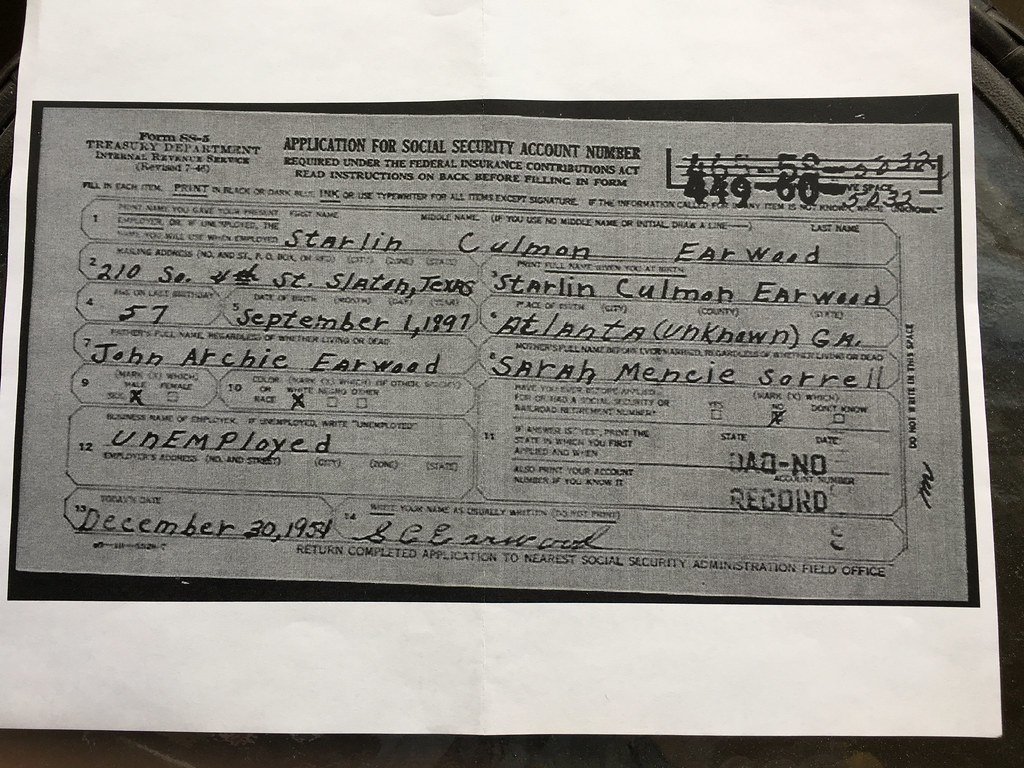
Image source: Openverse / Cook-Folger Family Archive and Genealogy (PDM 1.0)
SSA eligibility standards for a new SSN
SSA may assign a new number if you have ongoing identity theft. The misuse must be documented. It must continue despite your best efforts.
You must also show that a replacement card will not solve the problem.
Examples include someone using your SSN for work or taxes repeatedly. Another example is a synthetic identity built on your number. SSA does not issue new numbers for lost cards or one-time fraud.
Form SS-5, proof of identity, and application routes
Form SS-5 is the application for a Social Security card. You use it to request a replacement. You also use it to request a new number.
The form asks for your name, date of birth, and citizenship.
You must provide original documents or certified copies. A driver's license proves identity. A birth certificate proves age and citizenship.
A work permit or green card proves immigration status. SSA returns your documents by mail.
my Social Security account and earnings record review
Create a my Social Security account at SSA.gov. This lets you check your earnings record. Look for wages you never earned.
That is a sign of employment identity theft.
If you find errors, report them to SSA. You may need to provide proof. Your earnings record affects your future benefits.
Fixing it early protects your retirement income.
How SSA weighs police reports, FTC reports, and creditor letters
SSA wants proof. A police report shows you reported the crime. An FTC Identity Theft Report at IdentityTheft.gov creates an official record.
Creditor letters show which accounts are fraudulent.
The more evidence you have, the better. Keep copies of everything. SSA may reject your request if evidence is thin.
That is why we recommend building a paper trail before you apply.
Risk Factors: Tax Identity Theft, Synthetic Identity, Child SSN Theft, and Benefits Fraud
Not all identity theft is the same. Some types cause more damage. They also require different recovery steps.
IRS Form 14039 and the six-digit IP PIN
Tax identity theft happens when someone files a fake return in your name. You may get a notice from the IRS. You may also find your e-file rejected.
File IRS Form 14039. This alerts the IRS to the fraud. Then request an Identity Protection PIN (IP PIN).
This six-digit number changes every year. It blocks thieves from filing returns in your name.
Wage theft, unemployment fraud, and medical record mix-ups
Wage theft is when someone uses your SSN to get a job. Your earnings record shows wages you never earned. That can raise your tax bill or reduce your benefits.
Unemployment fraud is common. A thief claims benefits in your name. You may get a 1099-G form for benefits you never received.
Medical identity theft is also serious. Someone uses your SSN to get care. Your medical records may get mixed with theirs.
Why children and seniors face higher long-term risk
Children have clean credit files. Thieves love that. A child's SSN can be used for years before anyone notices.
Check your child's credit report early and often.
Seniors are targeted for benefits fraud. Thieves may redirect Social Security payments. They may also open Medicare accounts.
Monitor your SSA account and benefits statements closely.
Synthetic identity fraud and why it is so hard to untangle
Synthetic identity fraud mixes a real SSN with fake information. The thief may use your number with a different name and address. This creates a new identity that is hard to trace.
Banks may not link it to you. Credit bureaus may not flag it. You might only find out when you apply for credit.
Cleaning this up takes months or years. A new SSN may not help if the synthetic identity is already established.
Safe Recovery Workflow: FTC Report, Police Report, SSA OIG, and Credit Freezes
You need a plan. Random calls to banks and agencies will waste time. Follow these steps in order.
Step 1: Build your FTC Identity Theft Report at IdentityTheft.gov
Go to IdentityTheft.gov. Answer the questions. The site creates a personal recovery plan.
It also produces an FTC Identity Theft Report. This report is official. You can share it with banks, police, and SSA.
Step 2: File a police report and contact SSA OIG
File a police report with your local department. Get a copy. You will need it for SSA and creditors.
Then contact the SSA Office of the Inspector General (SSA OIG). Their fraud hotline is 1-800-269-0271. Report the misuse of your SSN.
Step 3: Freeze credit with Equifax, Experian, and TransUnion
Place a free credit freeze with all three bureaus. A freeze blocks new credit inquiries. Thieves cannot open accounts in your name.
You can lift the freeze when you need to apply for credit. It is free by federal law.
Step 4: Add fraud alerts, IRS IP PIN, and non-credit freezes
Add a fraud alert to your credit reports. A one-year alert tells lenders to verify your identity. An extended alert lasts seven years if you have an FTC report.
Request an IRS IP PIN. Also freeze your ChexSystems and NCTUE reports. These cover bank and utility accounts.
Step 5: Notify banks, employers, tax agencies, and medical providers
Tell your bank and credit card companies. Tell your employer. Tell your state tax agency.
Tell your health insurance and doctors. Give them your FTC report and police report. Ask them to flag your accounts for fraud.
Step-by-Step: How to Request a Replacement Social Security Card Without Delays
A replacement card keeps your same SSN. That's what most people need after identity theft. The process is free.
But small mistakes can cause weeks of delay.
Online, mail-in, and in-person options
Online is fastest if you have a my Social Security account. Not every state allows online replacement. You must be a U.S. citizen or have work authorization.
You also need a state-issued ID.
Mail-in uses Form SS-5. You send original documents or certified copies. SSA returns them by mail.
This route can take several weeks. Use certified mail and keep tracking numbers.
In-person means visiting an SSA field office. You may need an appointment. This is best if your case is complex or your documents are unusual.
Documents that prove identity, age, and citizenship
You need proof of identity. A driver's license or state ID works. You need proof of age.
A birth certificate is standard. You need proof of citizenship or immigration status. A passport, green card, or work permit works.
All documents must be originals or certified copies. Photocopies are not accepted. Make your own copies before you send anything.
That protects you if mail gets lost.
Tracking, follow-up, and common processing snags
Mail-in applications can stall. Missing documents are the top cause. Another snag is a name mismatch.
Your documents must match your current legal name.
Call SSA at 1-800-772-1213 if you haven't heard back in 30 days. Have your tracking number ready. Ask for a status update.
Keep a log of every call.
What to do if your online request is rejected
Online rejection is common. Sometimes SSA can't verify your identity. Sometimes your state doesn't participate.
If rejected, you can mail Form SS-5. Or you can visit a field office.
Don't resubmit the same online request. It will likely fail again. Switch to mail or in-person instead.
When to Seek a New SSN: SSA Interview, Evidence Packet, and Decision Timeline
A new SSN is not a first step. It's a last resort. You should only apply if misuse continues despite your best efforts.
Here's how that process works.
Building a case for ongoing, documented misuse
SSA wants proof that the problem won't go away. One fraudulent account is not enough. Repeated tax fraud is stronger.
A synthetic identity built on your number is stronger still.
Gather your FTC Identity Theft Report. Add your police report. Include letters from banks or creditors.
Show that accounts keep appearing. Show that you've frozen your credit and filed an IP PIN.
What happens after you submit your request
You submit Form SS-5 with your evidence packet. SSA reviews it. They may schedule an interview.
The interview is usually in person at a field office.
They will ask how the misuse started. They will ask what steps you've taken. They will ask why a replacement card won't solve the problem.
Answer clearly and honestly.
If SSA says no: protection plan and appeal options
Most requests are denied. That's the reality. If denied, you still have options.
You can request reconsideration. You can provide more evidence. You can also contact the SSA Office of the Inspector General again.
Keep your credit frozen. Keep your fraud alerts active. Renew your IRS IP PIN every year.
These steps protect you even without a new number.
When to get help from a consumer lawyer or Taxpayer Advocate Service
If tax fraud keeps happening, contact the IRS Taxpayer Advocate Service. It's free. If you're facing benefits denial or wage theft, a consumer lawyer can help.
Many offer free consultations.
Don't pay upfront for "SSN recovery" services. Most are unnecessary. The official steps are free and effective.
Mistakes, Legal Warnings, and Scams That Can Wreck Your Recovery
Identity theft recovery is full of traps. Some are honest mistakes. Others are scams targeting victims.
Here's what to avoid.
Believing paid services can buy you a new SSN
No company can sell you a new SSN. SSA issues numbers. Private companies have no authority.
Any service promising a new number is a scam.
Paid identity theft recovery services may help with paperwork. But you can do the same steps yourself for free. The FTC recovery plan at IdentityTheft.gov walks you through it.
Skipping the police report or FTC report
These two documents are your foundation. Without them, banks and SSA won't take you seriously. Some people skip the police report because they feel embarrassed.
Don't.
The FTC report is quick and online. The police report may take a visit. Both are worth the effort.
They prove your case and protect your rights.
Letting fraud alerts expire or reusing a compromised SSN online
A one-year fraud alert expires. Set a calendar reminder. Renew it or upgrade to an extended seven-year alert.
Credit freezes don't expire, so they're stronger.
Don't reuse your compromised SSN on random websites. Avoid giving it out unless legally required. Use your IP PIN when filing taxes.
Monitor your SSA earnings record every year.
Ignoring legal limits on new SSNs for debt, taxes, or criminal records
SSA will not give you a new number to escape debts. They won't help you avoid taxes or child support. They won't help you hide from criminal records.
These requests are denied.
If someone tells you otherwise, they're wrong. Misusing an SSN or lying on Form SS-5 can lead to fines or jail time. Stick to the legal path.
Comparison: Credit Freeze vs. Fraud Alert vs. IRS IP PIN vs. New SSN
Not all protections work the same way. Here's a side-by-side look.
| Protection | What It Does | Cost | Duration | Best For |
|---|---|---|---|---|
| Credit freeze | Blocks new credit inquiries | Free | Until you lift it | Credit identity theft |
| Fraud alert | Tells lenders to verify identity | Free | 1 year or 7 years | Early warning |
| IRS IP PIN | Blocks fake tax returns | Free | 1 year, renew annually | Tax identity theft |
| New SSN | Replaces your nine-digit number | Free | Permanent | Rare, ongoing misuse |
Best fit for tax theft, credit theft, medical theft, and child theft
Tax theft calls for an IRS IP PIN. Credit theft calls for a credit freeze. Medical theft means notifying your insurer and doctors.
Child theft needs a credit check and freeze on the child's file.
A new SSN may fit only if misuse is relentless. Even then, SSA rarely approves it.
Cost, duration, and who can place each protection
All four protections are free. Credit freezes last until you remove them. Fraud alerts expire.
IP PINs renew each year. A new SSN is permanent but hard to get.
You can place a freeze or alert yourself. You can request an IP PIN from the IRS. You can apply for a new SSN through SSA.
FAQs About Social Security Number Replacement After Identity Theft
Can I get a new Social Security number because of identity theft?
Yes, but it's rare. SSA requires proof of ongoing, documented misuse. You must show that a replacement card won't fix the problem.
Most requests are denied. Start with a replacement card and credit protections first.
Does a new SSN erase bad credit?
No. A new SSN does not erase your old credit history. Fraudulent accounts may still appear.
Your old and new numbers can both show up on reports. That can split your credit file and cause more problems.
How long does a replacement Social Security card take?
Online requests often arrive in 7 to 14 days. Mail-in requests can take several weeks. In-person visits may be faster if you have all documents.
Processing times vary by SSA workload.
What if someone already created a my Social Security account in my name?
Contact SSA immediately at 1-800-772-1213. They will help you reclaim the account. You may need to verify your identity in person.
Then set up a new password and two-factor authentication.
Should I pay a company to replace my SSN?
No. SSA issues SSNs, not private companies. Any service promising a new number is a scam.
The official process is free. Use IdentityTheft.gov and SSA.gov instead.
Will a new SSN stop tax identity theft?
Not always. A new number doesn't erase old tax records. You still need an IRS IP PIN.
You may also need to file Form 14039. The IP PIN is your main defense against tax fraud.