
Getting disability benefits usually comes down to one thing. Your medical evidence has to prove your case. Most denials we see happen because the medical evidence requirements weren't met, not because the person wasn't genuinely disabled.
The Social Security Administration (SSA) runs a five-step review, and medical evidence drives nearly every step. As of 2026, SSA still requires objective findings, treatment records, and functional proof tied to a 12-month duration standard. Here's what reviewers actually look for.
Quick Answer
Disability application medical evidence requirements center on objective proof of your impairment. SSA wants treatment records, imaging, labs, and doctor opinions. Evidence must show your condition lasts 12 months or longer.
Functional limits matter as much as diagnoses. Strong, consistent records win cases.
Why Incomplete Medical Evidence Sinks Disability Claims Before Review
Most disability claims die at the first stage. Not because the person isn't sick, but because the file doesn't prove it.
Disability Determination Services (DDS) reviews your case for SSA. Reviewers work from the paper file alone. If the proof isn't there, they can't assume it exists.
Here's what goes wrong most often:
- Treatment gaps. Long stretches with no doctor visits look like improvement.
- Missing records. DDS requests records and hears nothing back from a clinic.
- No medical source statement. Diagnoses alone say nothing about function.
- Inconsistent statements. What you tell your doctor and what you write on forms must match.
- Work activity above limits. Earning above substantial gainful activity can end a claim early.
Every item on that list is fixable. The catch is fixing it before a denial, not after.
| Evidence Gap | How a Reviewer Reads It |
|---|---|
| No visits for six months | Condition improved |
| Diagnosis with no function note | Impairment looks mild |
| Records missing from one clinic | That care never happened |
| Vague doctor letter | Opinion carries little weight |
If you're dealing with ongoing pain conditions, the paper trail matters more than the diagnosis itself. Reviewers want monthly visits, medication changes, failed treatments, and a clear functional decline.
Denials also cost time. The path from reconsideration to an Administrative Law Judge (ALJ) hearing can add a year or more. For many applicants, that also stretches out the payment timeline.
One more thing. Medical evidence has to show your impairment will last at least 12 months or result in death. Short-term problems rarely qualify, no matter how severe they feel right now.
The good news is that most of this sits within your control. You can request your own records. You can ask your doctor for a written statement.
You can keep showing up for care, even on the days it feels pointless. That consistency becomes evidence.
The Sequential Evaluation and Medical Evidence SSA Actually Reviews
SSA uses a five-step process to decide every adult claim. Medical evidence drives four of those five steps.
Here's the sequence:
- Are you working above the earnings limit? If yes, the claim usually stops here.
- Is your impairment severe and long-lasting? It must last 12 months or more.
- Does your condition match a listing? The Listing of Impairments sets severity benchmarks by body system.
- Can you do your past work? This depends on your residual functional capacity (RFC).
- Can you do any other work? Age, education, and RFC decide this one.
Step three is where listings come in. If your condition matches a listing exactly, you win. If it's close, you may win through medical equivalence.
That means your symptoms and findings are as severe as the listed criteria.
Steps four and five decide most claims in practice. SSA weighs your RFC against your past jobs and the national job market. Medical evidence about sitting, standing, lifting, and concentrating matters most here.
Duration is a hard rule. Your impairment has to last, or be expected to last, 12 months. That's why a single hospitalization rarely wins a case on its own.
Some applicants also hold records from other agencies. Disability records from other agencies, like VA files, can support your SSA claim. They don't replace SSA rules, but they add credibility.
One warning: part-time work while claiming can create problems. Earnings above the monthly limit count as substantial gainful activity. That can kill a claim before a reviewer ever opens your medical file.
Now we get to the heart of it. What actually counts as medical evidence?
Objective Medical Evidence: Records, Imaging, Labs, and Clinical Findings
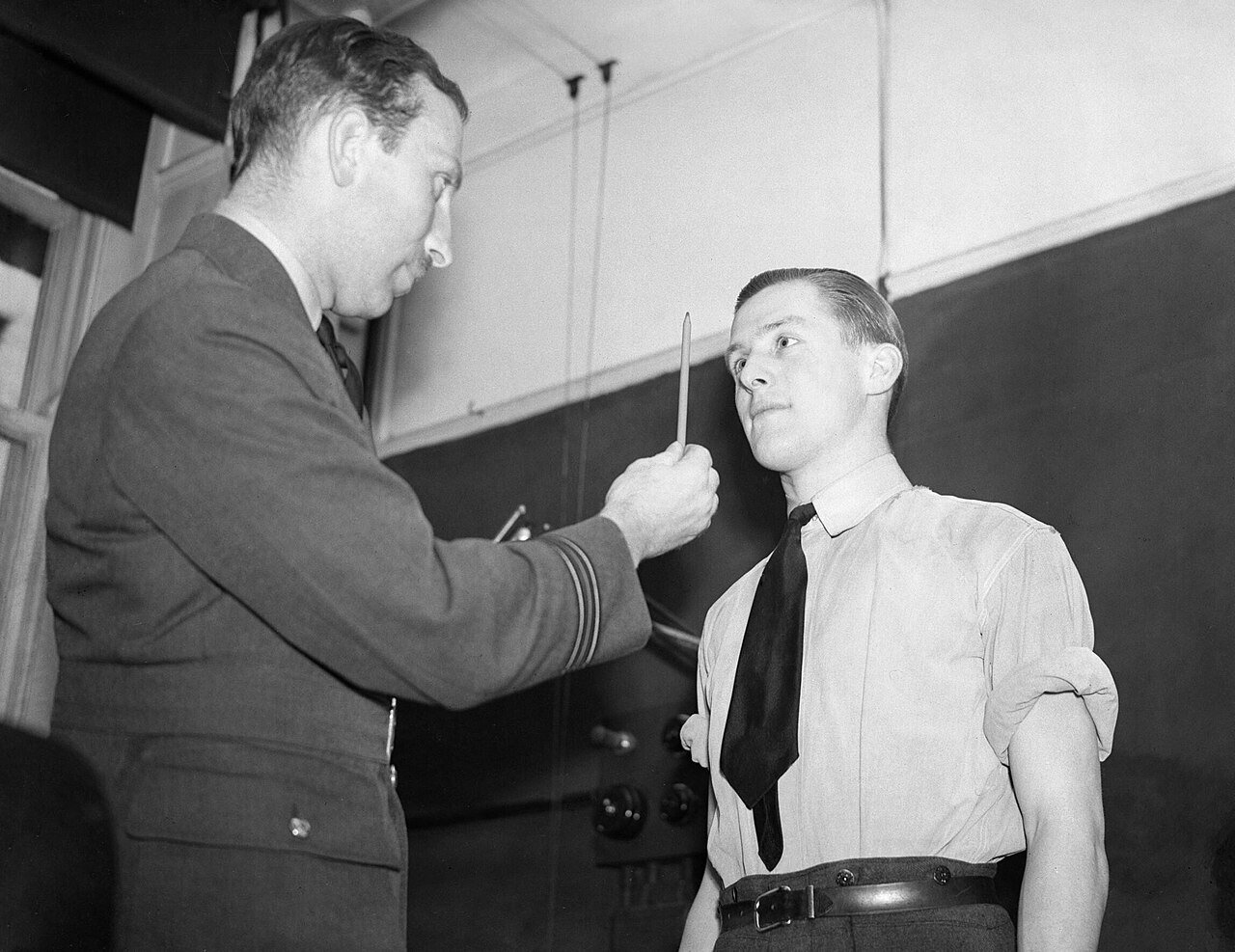
Image source: Wikimedia Commons / Daventry B J (Mr), Royal Air Force official photographer
Objective evidence is proof a doctor can see, measure, or test. It's the backbone of a strong file.
Common types include:
- Imaging. X-rays, MRIs, and CT scans.
- Lab work. Blood panels and urine tests.
- Diagnostic testing. EMG/NCS studies, pulmonary function tests, and stress tests.
- Clinical findings. Reflex loss, muscle weakness, range-of-motion limits, and joint swelling.
- Mental status exams. Memory, focus, and mood testing.
- Operative and discharge reports. Surgery notes and hospital summaries.
Here's the part most people miss. Objective evidence alone doesn't win. A herniated disc on an MRI proves you have a disc problem.
It doesn't prove you can't sit for more than 20 minutes.
That link, between the finding and your daily function, is what reviewers hunt for.
You can read SSA's official rules on what counts as acceptable medical evidence. The short version: records from licensed physicians, psychologists, and qualified specialists carry the most weight.
Records from chiropractors and therapists still help. SSA treats them as "other" sources. They can support a claim, but they rarely decide it.
Another detail. SSA reads the whole record, not one visit. A single bad MRI from 2019 means little on its own.
A pattern of findings over two years tells a much stronger story.
So how do you turn objective findings into a winning argument? You use a medical source statement.
Medical Source Statements and Residual Functional Capacity Forms
A medical source statement is a form your doctor fills out. It describes what you can and can't do.
The most important version is the RFC assessment. It covers:
- How long you can sit, stand, and walk
- How much you can lift and carry
- How often you can bend, stoop, and reach
- How well you focus, remember, and interact with others
- How many absences you'd need each month
Reviewers weigh medical opinions using two rules: supportability and consistency. Supportability asks whether the doctor backed the opinion with findings. Consistency asks whether the opinion matches the rest of the record.
This is where a lot of claims wobble. A doctor writes "patient cannot work" with no explanation. SSA gives that opinion little weight.
It's a conclusion, not evidence.
A stronger statement looks like this:
"The patient can sit for 20 minutes before needing to stand. She can lift under 10 pounds. She'd miss four days of work per month due to migraines."
That kind of detail gives a reviewer something to work with. It also lines up with the treating relationship. The longer and more frequent the care, the more weight the opinion usually gets.
Getting ready for a hearing starts with this paperwork. Bring the statements and ask your representative to review them first.
Symptoms, Pain, and Functional Limitations: Making Your Experience Count
Pain and fatigue don't show up on an MRI. That doesn't mean they don't count.
SSA evaluates symptoms in two stages. First, is there a medically determinable impairment? Second, do your symptoms match the severity you describe?
Consistency is everything here. Your forms, your hearing testimony, and your doctor's notes need to tell one story.
Ways to strengthen the symptom record:
- Keep a symptom diary. Note bad days, triggers, and how long episodes last.
- Report side effects. Drowsiness, dizziness, and brain fog are functional limits.
- Use third-party statements. A spouse or friend can describe what they actually see.
- Describe activities of daily living (ADLs) honestly. Don't downplay your struggles.
- Match your forms to your records. Say the same things to your doctor that you write to SSA.
ADLs cut both ways. If you claim you can't lift a gallon of milk but post about hiking, that hurts you. Reviewers check social media.
Keep it truthful and consistent.
Gather the right paperwork before you file, not after.
One final point. You don't need to be dramatic. You need to be specific.
"I can't stand long" is weak. "I can stand about 10 minutes before my back spasms" gives a reviewer a real number to weigh.
Medical Evidence Mistakes That Cause Denials, Delays, and Appeals
Small paperwork errors cause more denials than severe impairments do. We've seen files with strong diagnoses fall apart over missing signatures and late records.
Here are the mistakes that hurt applicants most:
- Skipping treatment because of cost. A long gap in care reads as recovery, not hardship.
- Telling the doctor one thing and SSA another. Inconsistency kills credibility fast.
- Filing without a medical source statement. A diagnosis alone says nothing about function.
- Ignoring DDS requests. If they ask for a clinic's address, send it the same week.
- Missing appeal deadlines. You have 60 days from the denial notice, and that clock doesn't pause.
- Working above the earnings limit. Earning over the monthly cap can end a claim before review.
- Downplaying symptoms on forms. If you write "I manage okay," reviewers believe you.
One pattern shows up again and again. Applicants describe their worst day to the doctor and their best day on the function report. That mismatch gives a reviewer an easy reason to doubt everything else.
Delays work the same way. Records that arrive after the decision force a reopening, not a quick fix. Send everything early and keep proof of what you sent.
A fax confirmation or portal screenshot can save months later.
If a denial happens anyway, don't panic. You can appeal, and many claims win at the hearing stage. Our guide on checking your appeal status online walks through the tracking steps.
And if back pay is your concern, the deposit timeline explained here covers what to expect.
Safe Practices for Collecting, Submitting, and Updating Disability Records
Treat your medical file like a case you're building, because that's exactly what it is.
Start by requesting your own records from every provider. You have a legal right to them under HIPAA. Get them before you file so you know what SSA will see.
Then follow these habits:
- Sign a fresh SSA-827 release for every provider you list. Old authorizations expire.
- Keep a running log of visit dates, providers, and diagnoses.
- Ask for the medical source statement early. Don't wait until the hearing is scheduled.
- Submit new records as they appear. Don't save everything for one big drop.
- Check your earnings record for errors that could confuse the work history review.
- Save copies of everything you send. Date-stamp each submission.
Here's a rule that saves claims. Anything you send should support a specific limitation. A lab result with no explanation means little.
A doctor's note tying that result to your ability to sit or focus means a lot.
Updates matter too. If your condition worsens or a new diagnosis appears, tell SSA right away. Continuing disability reviews and appeals both hinge on the current record, not the one from two years ago.
If you're also managing other benefit programs, keep those files separate but consistent. Our piece on part-time work while on SSDI explains where the earnings lines fall. And if your household includes family members receiving support, the rules on benefits for disabled parents' children can clarify how evidence carries across claims.
Consultative Exams, Appeals, and Hearings: When to Seek Professional Help
A consultative exam (CE) is not a trap, but it can trip you up. SSA schedules one when your own records leave gaps.
The doctor is not your treating physician. They examine you once and write a report. That report can help or hurt depending on how you handle it.
A few practical tips:
- Show up early and stay calm. Missed exams lead to denials.
- Describe your worst days honestly. Don't perform, but don't hide limits either.
- Bring a medication list and any recent records.
- Don't exaggerate. Reviewers compare CE notes against your file.
If you get denied after a CE, the appeal path usually runs through reconsideration and then an ALJ hearing. That's where most claims actually win. According to SSA data, hearing-level approval rates run far higher than initial decisions.
When should you hire help? Consider it if:
- You have multiple impairments that are hard to explain.
- Your file is thin or inconsistent.
- You've already been denied once.
- You're within 60 days of a hearing.
Attorneys and non-attorney representatives work on contingency for most cases. Fees are capped by SSA, so you won't pay upfront. A representative can request records, draft a hearing brief, and question witnesses.
That kind of preparation often tips a close case.
You don't always need help. Simple cases with clean records can win alone. But if you're dealing with a denied claim or a hearing notice, professional eyes on the file are worth it.
Real Scenarios: How Strong vs. Weak Medical Evidence Changes Outcomes
Numbers tell this story better than advice does. Here are two composite cases from our review of published SSA decision patterns.
Case one: weak file. A 48-year-old with chronic back pain filed with two MRI reports and no treatment notes. He hadn't seen a doctor in 14 months. His function report said he "sometimes struggles." DDS denied at initial review.
Reconsideration denied too. Total wait before an ALJ hearing: 16 months. His file eventually won, but only after new treatment records were added.
Case two: strong file. A 52-year-old with the same diagnosis saw a pain specialist monthly for two years. Records showed failed injections, medication side effects, and a clear RFC limit of 15 minutes sitting. Her doctor's statement listed four missed workdays per month.
She won at initial review. Total wait: about 3 months.
The diagnoses were nearly identical. The evidence wasn't.
| Factor | Weak File | Strong File |
|---|---|---|
| Treatment frequency | None for 14 months | Monthly for 2 years |
| Functional statement | Vague | Specific limits |
| Failed treatments | Not documented | Documented |
| Outcome | Hearing win, 16 months | Initial win, 3 months |
The lesson is plain. Consistency and detail beat severity on paper. If you have a condition like chronic back pain, the same pattern holds.
Documented treatment history carries the file.
Frequently Asked Questions
What medical evidence does SSA need for a disability claim?
SSA needs objective findings, treatment records, and a functional opinion from a medical source. Records should cover 12 months or more of impairment. Imaging, labs, and clinical exam notes all support the file.
Vague statements carry little weight.
Can I win disability without seeing a doctor regularly?
Rarely. SSA needs treatment records to confirm severity and duration. A gap in care suggests your condition improved.
If cost or access blocks care, document those barriers and seek low-cost clinics.
How long should medical records cover?
At least 12 months, and longer is better. SSA looks for a pattern, not a snapshot. Records covering two or more years with consistent findings tend to carry more weight.
Does a doctor's note saying I can't work help?
Not on its own. SSA wants functional details, not conclusions. Ask your doctor to describe specific limits like sitting time, lifting capacity, and expected absences.
That kind of statement supports an RFC finding.
What happens if my medical records are incomplete?
SSA may schedule a consultative exam to fill the gaps. Those reports can help or hurt. Send your own records first so the CE doctor has context.
Missing records often delay a decision by months.
Pingback: * Benefits for People With Limited Work History - OMAGOUS
Pingback: * Disability Benefits for Mental Health Conditions - OMAGOUS