
Can you receive retirement benefits while outside the USA? For most retirees, the answer is yes, but the details matter. Social Security retirement benefits usually continue.
SSI often stops. Medicare rarely covers care abroad.
As of 2026, the Social Security Administration (SSA) restricts payments in only two countries: Cuba and North Korea. The agency also requires proof of life for many beneficiaries abroad. These rules change based on your benefit type, citizenship, and country of residence.
Here's what you need to know before you move.
Quick Answer: Can You Receive Retirement Benefits While Outside the USA?
Yes, you can receive most U.S. retirement benefits abroad. Social Security retirement, SSDI, and survivors benefits usually continue. SSI generally stops outside the USA.
Medicare rarely covers care abroad. Private pensions and 401(k)s follow their own rules. Check your specific country and benefit type.
The Short Answer Most Retirees Need
The short answer is yes for most benefits, but no for some. Social Security retirement benefits are portable to most countries. SSI is not.
Medicare is not. So your specific mix matters.
If you receive multiple benefits, each one has its own rule. For example, you might keep your Social Security check but lose your SSI payment. That's why you need to check each benefit separately.
What Changes Based on Your Benefit Type and Country
Your country of residence changes everything. The SSA pays benefits in most countries. But Cuba and North Korea are restricted.
Some countries have tax treaties that lower withholding.
Your citizenship also matters. U.S. citizens can receive benefits in more countries than non-citizens. Green card holders may face different rules.
Foreign nationals who worked in the U.S. have their own set of rules.
Your benefit type is the third factor. Retirement benefits are the most portable. SSI is the least portable.
Medicare is almost never portable. Private pensions depend on the plan.
Which U.S. Retirement Benefits Can You Receive Abroad?
Most U.S. retirement benefits can follow you overseas. The big exceptions are SSI and Medicare. Private pensions and IRAs usually continue.
Each benefit has its own rulebook.
Here's a quick table to see what typically happens.
| Benefit Type | Continues Abroad? | Key Rule |
|---|---|---|
| Social Security Retirement | Yes, in most countries | Restricted in Cuba and North Korea |
| SSDI | Yes, in most countries | Same country rules as retirement |
| Survivors Benefits | Yes, in most countries | Same country rules |
| SSI | No, generally stops | Ends after 30 days outside the U.S. |
| Medicare | No, rarely covers care abroad | Does not pay for most foreign care |
| Private Pension | Depends on plan | Check your plan documents |
| 401(k) / IRA | Yes | Follows U.S. tax rules |
| VA Disability | Yes, with rules | Different rules for different countries |
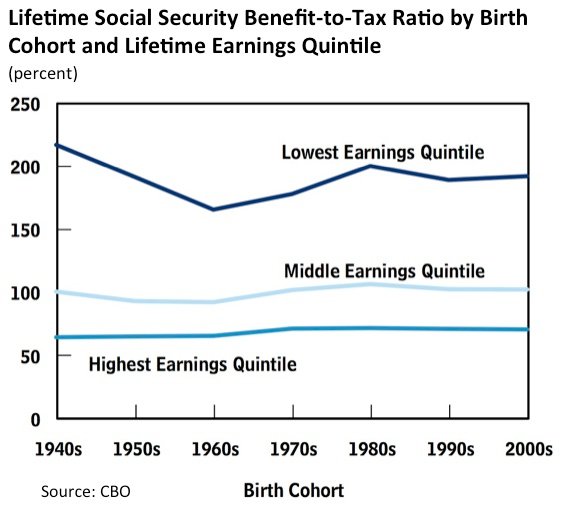
Image source: Wikimedia Commons / US Congressional Budget Office
Social Security Retirement, SSDI, and Survivors Benefits
These three benefits are the most portable. You can receive them in most countries. The SSA sends payments via direct deposit or paper check.
You must follow proof-of-life rules.
If you move to a restricted country, payments stop. Cuba and North Korea are the only two. For all other countries, you can keep your benefits.
Just make sure your address is up to date. The SSA publishes a list of countries where payments are restricted on its website.
Supplemental Security Income (SSI) and Why It Usually Stops
SSI is needs-based. It has strict residency rules. You generally cannot receive SSI outside the USA.
Payments stop after 30 days abroad. There are very few exceptions.
If you plan to live abroad, do not count on SSI. You will lose it. That's a hard rule.
Plan your budget accordingly.
Medicare, FEHB, and TRICARE Outside the U.S.
Medicare does not cover care outside the USA. There are tiny exceptions. For example, emergency care in Canada or Mexico while traveling to the U.S.
But routine care is not covered.
FEHB and TRICARE have overseas options. FEHB plans may offer foreign coverage. TRICARE has specific overseas rules.
Check your plan before you move.
Private Pensions, 401(k)s, IRAs, and Annuities
Private pensions depend on your plan. Some pay anywhere. Others restrict foreign addresses.
Read your plan documents carefully.
401(k)s and IRAs are U.S. accounts. You can keep them while abroad. You must follow U.S. tax rules.
Required minimum distributions (RMDs) still apply. Annuities have their own contracts. Check with your provider.
Country Rules, Tax Treaties, and Totalization Agreements
Your country of residence changes your benefits. Some countries have tax treaties. Others have totalization agreements.
These deals can save you money and protect your credits.
The SSA publishes a list of countries with payment restrictions. As of 2026, only Cuba and North Korea are restricted. But other countries have special rules.
For example, some countries require paper checks.
SSA Restricted Countries: Cuba and North Korea
The SSA cannot send payments to Cuba or North Korea. This is due to U.S. sanctions. If you live there, your benefits stop.
You cannot receive them while residing in those countries.
There are no exceptions for retirement benefits. SSI also stops. If you move back to the U.S., benefits can resume.
But you must notify the SSA.
Tax Treaties That Prevent Double Taxation
A tax treaty is an agreement between two countries. It prevents you from paying tax twice on the same income. The U.S. has tax treaties with many countries.
These treaties can lower your withholding rate.
For example, some treaties let you claim a foreign tax credit. Others exempt certain benefits. The IRS provides a full list of tax treaties on its website.
You can check if your country has one.
Totalization Agreements and Your Work Credits
A totalization agreement helps if you worked in both countries. It combines your work credits. This can help you qualify for benefits.
The U.S. has agreements with about 30 countries.
If you don't have enough U.S. credits, a totalization agreement can help. You might qualify for partial benefits. Check the SSA website for the list of agreement countries.
Foreign Bank Direct Deposit vs. U.S. Bank Direct Deposit
You can receive benefits via direct deposit. You can use a U.S. bank account. Or you can use a foreign bank account.
Each option has pros and cons.
A U.S. bank account is simple. But you may pay fees for international transfers. A foreign bank account is convenient.
But not all foreign banks accept SSA deposits. The SSA has a list of approved foreign banks.
Risk Factors: What Can Stop Your Benefits or Trigger Penalties
Several things can go wrong when you receive benefits abroad. You might lose SSI. You might face tax penalties.
You might miss a proof-of-life form. These risks are manageable if you plan ahead.
The biggest risk is not knowing the rules. For example, many retirees don't realize SSI stops. Others forget to file FBAR.
Penalties can be severe. So let's go through the main risks.
SSI Residency Rules and Payment Suspensions
SSI stops when you leave the U.S. for more than 30 days. There are very few exceptions. For example, if you are a child of military parents stationed abroad.
But for most retirees, SSI ends.
If you don't report your move, you may face overpayments. The SSA will ask for the money back. That can be a nasty surprise.
So report your move immediately.
Medicare’s Limited Coverage Abroad
Medicare does not cover most care abroad. You might think it works like travel insurance. It doesn't.
Only a few exceptions exist. For example, emergency care in Canada or Mexico while traveling to the U.S.
If you live abroad, you need local health insurance. Or you need international health insurance. Do not rely on Medicare.
You will pay out of pocket.
Proof-of-Life Forms and Overpayment Recovery
The SSA sends proof-of-life forms to many beneficiaries abroad. You must complete and return them. If you don't, your benefits stop.
The form is usually SSA-7161 or SSA-7162.
If your benefits stop, you can restart them. But you must return the form. Overpayments can happen if you don't report changes.
The SSA will recover overpayments. You may have to repay money.
FBAR, FATCA, and Foreign Account Reporting Mistakes
If you have a foreign bank account, you may need to file FBAR. The threshold is $10,000. You file it with FinCEN.
You may also need to file FATCA with the IRS. The threshold is $50,000 or $100,000.
Failing to file can lead to big penalties. Some penalties are $10,000 per violation. So don't ignore these forms.
Report all foreign accounts.
Withholding Surprises and Required Minimum Distributions
Your retirement benefits may have U.S. tax withholding. You can choose your withholding rate. If you don't, the default may be too low.
You might owe taxes at the end of the year.
Required minimum distributions (RMDs) still apply. You must take RMDs from IRAs and 401(k)s. The age is 73 as of 2026.
If you miss an RMD, the penalty is 25%. So set up automatic RMDs.
Safe Practices for Keeping Your Benefits Flowing Abroad
You can keep your benefits flowing with a few smart moves. Set up direct deposit. File your taxes.
Update your address. These steps prevent most problems.
The key is to stay proactive. Don't wait for the SSA to contact you. Report changes early.
Keep good records. Here are the safe practices.
Set Up International Direct Deposit Correctly
International direct deposit is the safest way to get paid. You can use a U.S. bank or a foreign bank. If you use a foreign bank, check the SSA approved list.
Not all banks qualify.
You can also use a U.S. bank account. That's often easier. But you may pay currency conversion fees.
Choose the option that works for you. Update your deposit info with the SSA.
File U.S. Taxes and Claim Foreign Tax Credits
You must file U.S. taxes on your worldwide income. That includes your retirement benefits. You may also need to file a foreign tax return.
To avoid double taxation, claim the foreign tax credit.
Use IRS Form 1116. This form lets you claim credits for taxes paid to a foreign country. You can also use tax treaties.
The IRS website has details. Keep records of all taxes paid.
Update Your Address and Power of Attorney with SSA
Tell the SSA when you move. You can do this online or by phone. If you don't, your benefits may stop.
The SSA needs your current address.
Also consider a power of attorney. If you become unable to manage your benefits, someone can help. Set this up before you move.
It's a simple step that saves headaches.
Manage Currency Exchange and Healthcare Coverage
Currency exchange rates can change. Your benefit amount in local currency may go up or down. You can use a multi-currency account.
Or you can transfer money in batches. This helps you manage risk.
Healthcare coverage is another must. Medicare won't cover you abroad. Get local health insurance or international insurance.
Some countries have public healthcare for residents. Check your options before you move.
Step-by-Step: How to Set Up Your Retirement Benefits for Life Outside the USA
Setting up your benefits for life abroad takes three phases. The first phase happens before you move. The second phase happens right after you arrive.
The third phase is ongoing maintenance.
Before You Move: Check Country Rules and Benefit Eligibility
Start by checking the SSA payment rules for your destination. The agency's "Your Social Security Check While Outside the United States" page lists every country and its restrictions. If you're moving to Cuba or North Korea, payments stop.
For everywhere else, you're likely fine.
Next, confirm which benefits you receive. If you get SSI, expect it to end. If you rely on Medicare, shop for local or international health insurance.
If you have a private pension, call your plan administrator. Ask one question: "Do you send payments to foreign addresses?"
Finally, gather your documents. You'll need your Social Security card, passport, and bank details. If you're applying for benefits from abroad, use SSA Form SSA-1199.
That's the application for foreign residents.
After You Move: Notify SSA, IRS, and Your Bank
Tell the SSA your new address within 30 days. You can do this by phone or mail. If you don't, your payments may stop.
The SSA needs to know where you live.
Set up international direct deposit. You can use a U.S. bank account or a foreign bank on the SSA's approved list. If you use a foreign bank, the SSA sends payments in U.S. dollars.
Your bank converts to local currency.
Tell the IRS if you change your tax residency. You may need to file Form 1040 with a foreign address. Also file FBAR if your foreign accounts exceed $10,000 at any point in the year.
Ongoing: Proof of Life, Tax Filing, and Record Keeping
The SSA sends proof-of-life forms to many beneficiaries abroad. These are usually Form SSA-7161 or SSA-7162. Return them on time.
If you don't, your benefits stop.
File your U.S. taxes every year. Claim the foreign tax credit on Form 1116 if you paid foreign taxes. Keep records of all foreign accounts.
The IRS requires you to report them on Form 8938 if they exceed the threshold.
Review your plan once a year. Check exchange rates. Confirm your direct deposit still works.
Update your address if you move again. Small tasks prevent big problems.
Comparing Your Options: Healthcare, Banking, and Tax Residency
Three big decisions shape your life abroad. You need to pick healthcare coverage. You need to pick a bank for deposits.
You need to pick a tax residency. Each choice has trade-offs.
Medicare vs. Local Healthcare vs. International Health Insurance
Medicare rarely covers care abroad. Local healthcare is often cheaper but may have language barriers. International health insurance covers you in multiple countries but costs more.
Here's how they compare.
| Option | Best For | Main Drawback |
|---|---|---|
| Medicare | Short trips back to the U.S. | No coverage abroad |
| Local Healthcare | Long-term residents in one country | Limited to that country |
| International Insurance | Frequent travelers and expats | Higher premiums |
If you live in one country permanently, local healthcare works. If you travel often, international insurance is safer. If you only visit the U.S., keep Medicare Part A for hospital care there.
U.S. Bank Account vs. Foreign Bank Account for Direct Deposit
A U.S. bank account is simple. The SSA deposits directly. You withdraw cash abroad using an ATM.
You may pay foreign transaction fees.
A foreign bank account is convenient for daily life. But not all foreign banks accept SSA deposits. The SSA maintains a list of approved banks.
Check that list before you open an account.
If you use a foreign bank, you may face currency conversion fees. If you use a U.S. bank, you may face ATM fees. Compare the costs.
Pick the option that saves you the most.
U.S. Tax Residency vs. Foreign Tax Residency
U.S. citizens pay U.S. taxes on worldwide income, no matter where they live. You can claim the foreign tax credit to avoid double taxation. You may also qualify for the Foreign Earned Income Exclusion, but that only applies to earned income, not retirement benefits.
Foreign tax residency depends on the country. Some countries tax your worldwide income. Others tax only local income.
Some have tax treaties with the U.S. that lower your rate.
If you renounce U.S. citizenship, different rules apply. That's a major decision. Talk to a cross-border tax advisor before you do anything drastic.
Real Scenarios: Who This Works For and Who It Doesn't
Retirement abroad works well for some people. It fails for others. The difference comes down to your benefit mix and your destination.
U.S. Citizen Retirees in Mexico, Canada, and Europe
Mexico, Canada, and most of Europe have no SSA restrictions. Social Security retirement benefits continue. Direct deposit works.
Many retirees live well on their benefits in these countries.
But Medicare doesn't cover you. In Mexico, private health insurance is affordable. In Canada, you may qualify for provincial healthcare after residency.
In Europe, each country has its own rules. Check local requirements.
Military and Federal Retirees Overseas
Military retirees can receive their pensions abroad. But TRICARE has specific overseas rules. You may need to enroll in TRICARE Overseas Program (TOP).
Federal retirees under FERS or CSRS can receive annuities abroad. But FEHB coverage varies by plan.
VA disability compensation continues in most countries. But VA pension has residency rules. Check with the VA before you move.
Survivors and Dual Citizens Receiving Benefits Abroad
Survivors benefits continue in most countries. The same country restrictions apply. Dual citizens can receive benefits in both countries.
But they must follow U.S. tax rules.
If you're a dual citizen, you may face extra reporting. You may need to file taxes in both countries. A tax treaty can help.
But you must claim the treaty benefits correctly.
Foreign Nationals Who Worked in the U.S.
Foreign nationals who worked in the U.S. can receive Social Security benefits abroad. But the rules depend on their citizenship and country of residence. Some countries have totalization agreements.
Others don't.
If you're a foreign national, check your eligibility before you leave. You may need to file Form W-8BEN to claim treaty benefits. The SSA can withhold taxes if you don't.
Mistakes to Avoid and When to Get Expert Help
Most problems come from simple mistakes. You forget to report a move. You miss a proof-of-life form.
You don't file FBAR. These errors cost money and time.
Top 10 Mistakes Expats Make with Retirement Benefits
- Not telling the SSA about a move.
- Assuming SSI continues abroad.
- Relying on Medicare for foreign care.
- Missing proof-of-life forms.
- Failing to file FBAR or FATCA.
- Ignoring required minimum distributions.
- Choosing the wrong withholding rate.
- Not claiming foreign tax credits.
- Using an unapproved foreign bank.
- Forgetting to update a power of attorney.
Each mistake has a fix. Report changes early. File forms on time.
Keep good records. Set calendar reminders for every deadline.
When to Hire a Cross-Border Tax Advisor or Expat Financial Planner
Hire a cross-border tax advisor if you have foreign accounts over $10,000. Hire one if you own property in two countries. Hire one if you're unsure about tax treaties.
An expat financial planner can help with currency risk and investment allocation. They can also coordinate with your tax advisor. The cost is usually worth it.
A single mistake can cost thousands.
Final Verdict: Your Decision Guide for Benefits Outside the USA
If you receive Social Security retirement, SSDI, or survivors benefits, you can likely live abroad. If you receive SSI, you cannot. If you rely on Medicare, you need new coverage.
Check your country's rules. Set up direct deposit. File your taxes.
Return your proof-of-life forms. Do these things, and your benefits will follow you almost anywhere.