
Supplemental Security Income (SSI) is a federal program that provides monthly cash payments to seniors with limited income and resources. If you’re a senior living with your children, understanding how this living arrangement affects your SSI eligibility and benefits is crucial for financial planning.
This guide explores how living with your children impacts your SSI benefits, what rules apply to your household, and how to navigate this situation to maximize your financial security.

Quick Answer
SSI benefits for seniors living with their children are not automatically reduced simply because you share a home. Your eligibility depends on income limits ($943/month in 2024 for individuals) and resource limits ($2,000). If your children help pay household expenses, this may count as “in-kind support and maintenance” (ISM), which could reduce your benefit. Living arrangements don’t disqualify you from SSI, but they require careful reporting to avoid overpayment issues.
How Living With Your Children Affects Your SSI Eligibility
Your SSI eligibility isn’t automatically eliminated because you live with your children. However, Social Security evaluates your situation differently than if you lived alone or in a facility.
The key factor isn’t who you live with—it’s your income and countable resources. If your income exceeds the SSI limit or your resources exceed $2,000 ($3,000 if married), you won’t qualify, regardless of your living arrangement. Living with adult children doesn’t change these thresholds.
The way expenses are shared in your household can affect your benefits. If your children contribute toward household expenses—food, utilities, rent, or mortgage—Social Security may count this as “in-kind support and maintenance.” Understanding these rules prevents costly mistakes.
Understanding In-Kind Support and Maintenance (ISM)
In-kind support and maintenance refers to food and shelter received that you don’t pay for yourself. If your children provide or help pay for these essentials, Social Security may reduce your SSI benefit.
If your daughter pays for groceries or your son covers part of the utilities, Social Security might consider this as support you received. The program reduces your SSI benefit by up to one-third of the federal benefit rate, plus $20. For 2024, this maximum reduction is approximately $328 per month ($943 ÷ 3 + $20).
However, not every contribution from your children triggers this reduction. Social Security distinguishes between:
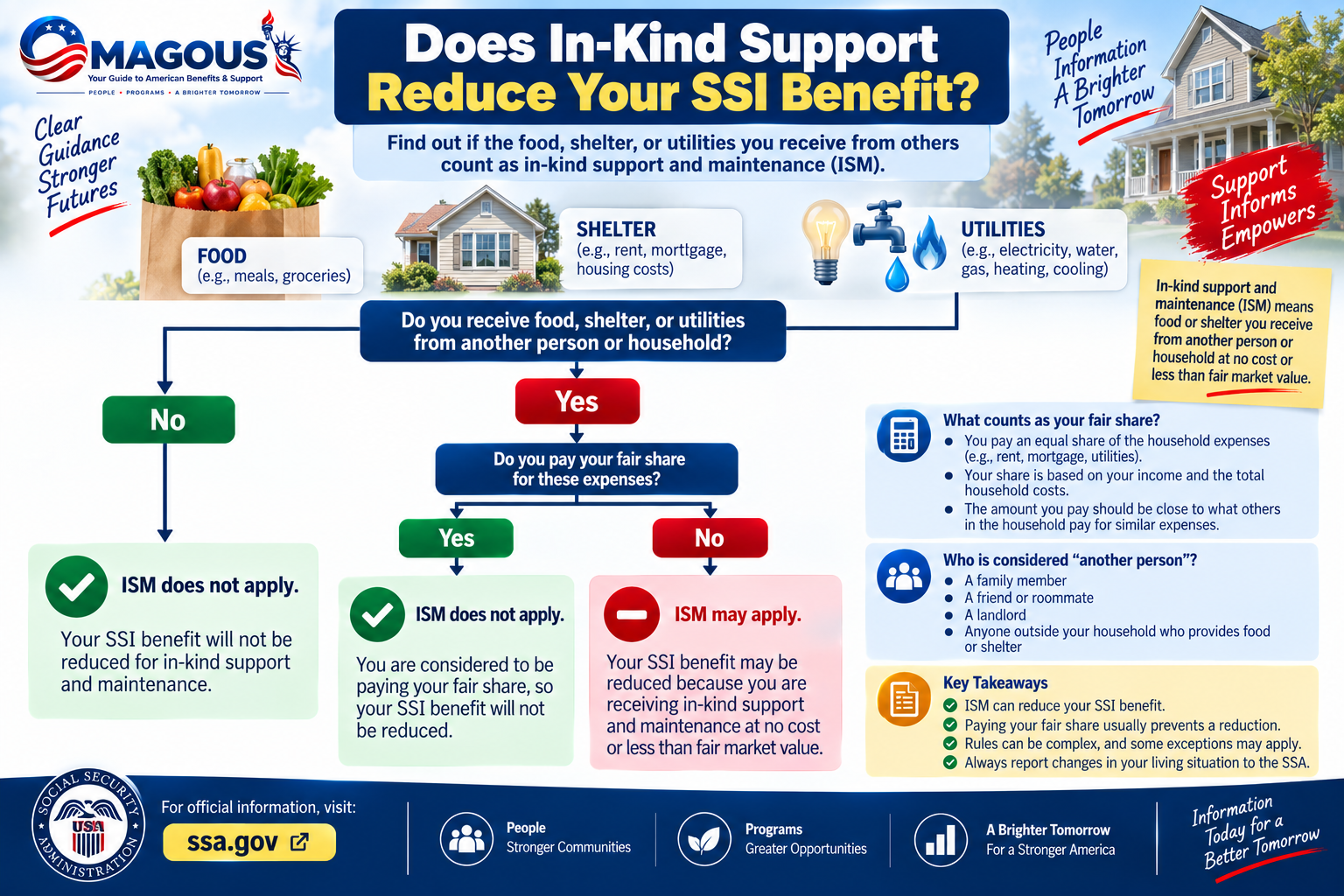
- Household expenses shared proportionally – If you contribute your fair share to household costs, ISM typically doesn’t apply
- Direct gifts or unpaid support – If your children completely cover your food and shelter costs, ISM likely applies
- Loan arrangements – If you’re expected to repay assistance, it may not count as ISM
If you and your children formally establish a reasonable rent arrangement and you pay your share of utilities and food costs, you can minimize ISM issues.
Income Limits When Living With Children
Your personal income limits remain the same whether you live alone or with your children. For 2024, the federal SSI limit is $943 per month for individuals and $1,415 for couples.
Any earned income from employment reduces your SSI benefit dollar-for-dollar after the first $65 and a 50% exclusion. So if you earn $200 monthly, Social Security counts $135 toward the limit ($200 – $65 = $135), and your SSI benefit decreases by $135.
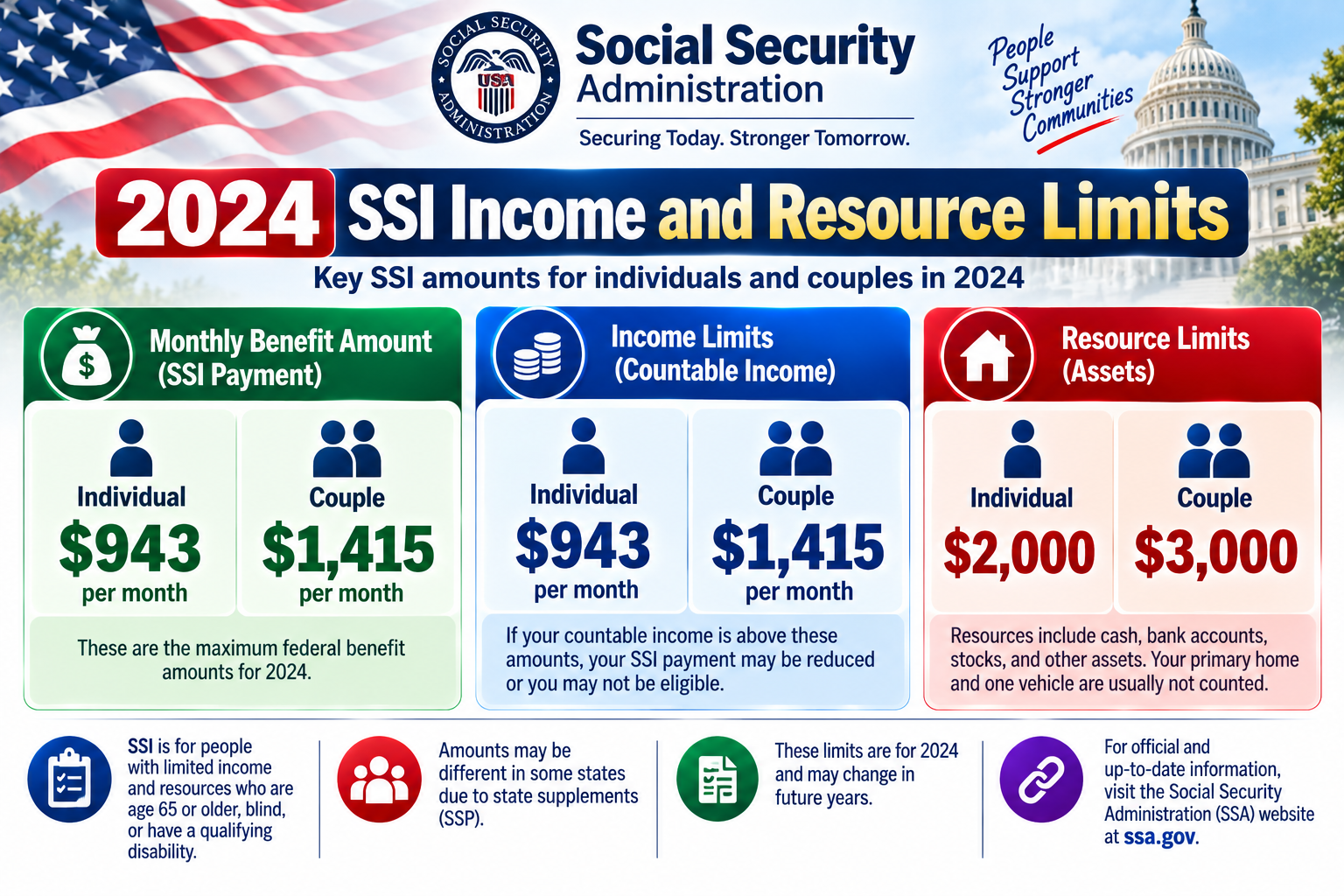
Unearned income—such as pensions, rental income, or money from your children—counts fully against the limit with no exclusions. If one of your adult children gives you $100 monthly, this $100 counts entirely against your $943 limit, reducing your benefit by $100.
What matters is what you personally receive and own, not what your children possess or earn.
Resource Limits and Shared Household Assets
Your countable resources must stay under $2,000 ($3,000 if married) to remain SSI-eligible. The critical question is: what counts as your resource?
If you and your children jointly own a bank account or property, Social Security may count your share. However, if accounts and assets belong entirely to your children and you have no legal claim to them, they typically don’t count against your limit.
This becomes complex if your children add you to their bank account for convenience, or if you share a home that’s titled in their name. In these situations:
- Joint bank accounts – Your share is usually countable, even if your children deposited most of the funds
- Property owned by children – Generally doesn’t count against your resources if you have no ownership interest
- Vehicles and personal items – Your own possessions count; your children’s don’t
To avoid resource problems, consider clarifying ownership and having separate accounts when possible. If you must maintain a joint account with adult children, keep balances low and document that funds belong to them.
Reporting Your Living Arrangement to Social Security
Accurate reporting is essential to maintain your SSI eligibility and prevent overpayments that Social Security may demand you repay later.
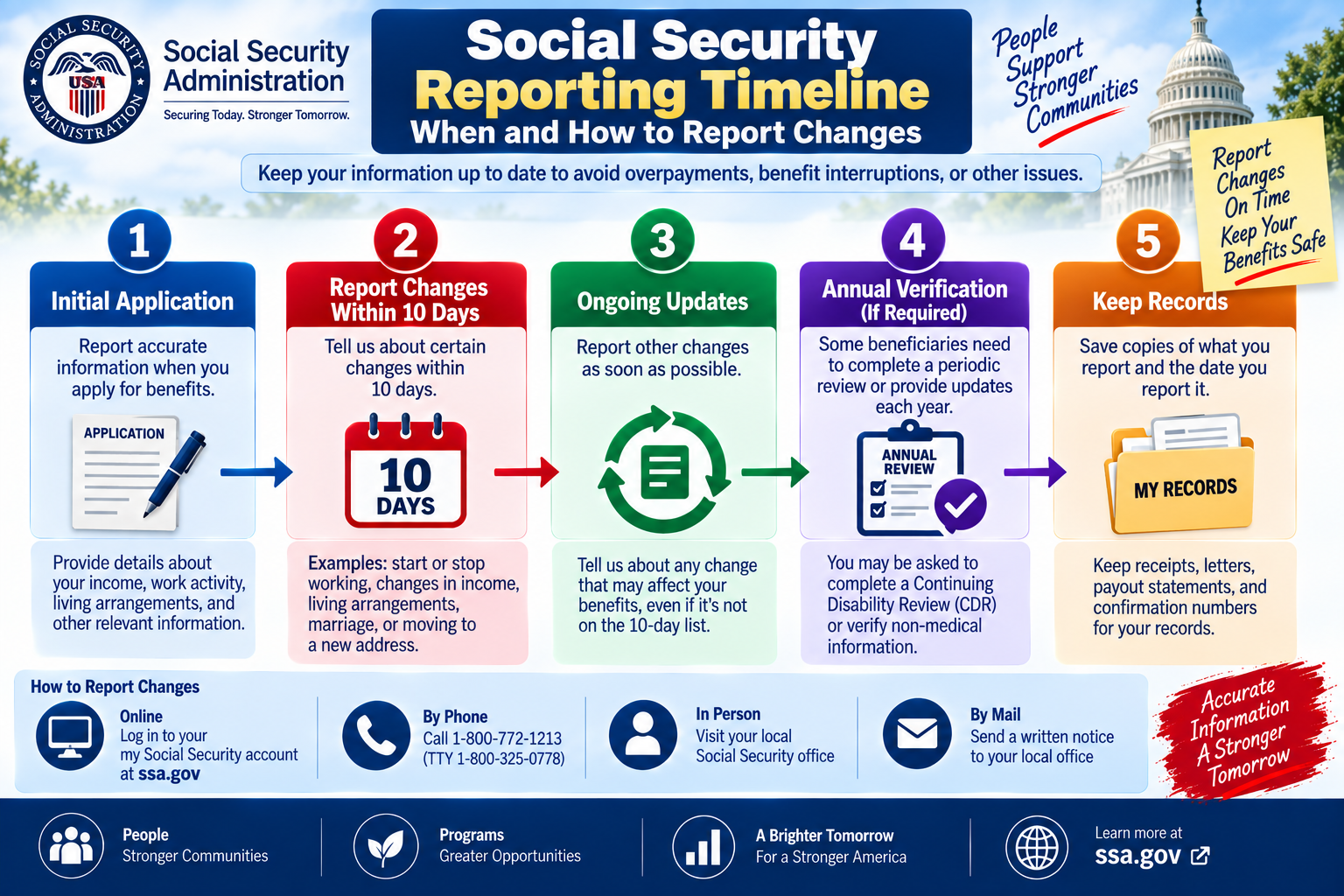
When you first apply for SSI, clearly report:
- Your current living arrangement (with whom you live and why)
- Whether household members contribute to rent, mortgage, food, or utilities
- Any money or support your children provide monthly
- The cost of your household’s total food and shelter expenses
After your benefits begin, you must report changes within 10 days. If your living situation changes—such as your children moving out, a new person moving in, or a change in expense-sharing arrangements—notify Social Security immediately.
Many seniors make the mistake of assuming Social Security already knows their living situation or that reporting isn’t necessary if nothing major changed. This leads to overpayments. Social Security relies on your reports to calculate benefits correctly.
How to Manage Finances When Living With Adult Children
Managing finances carefully protects both your SSI benefits and your relationship with your family. Here are practical steps to take:
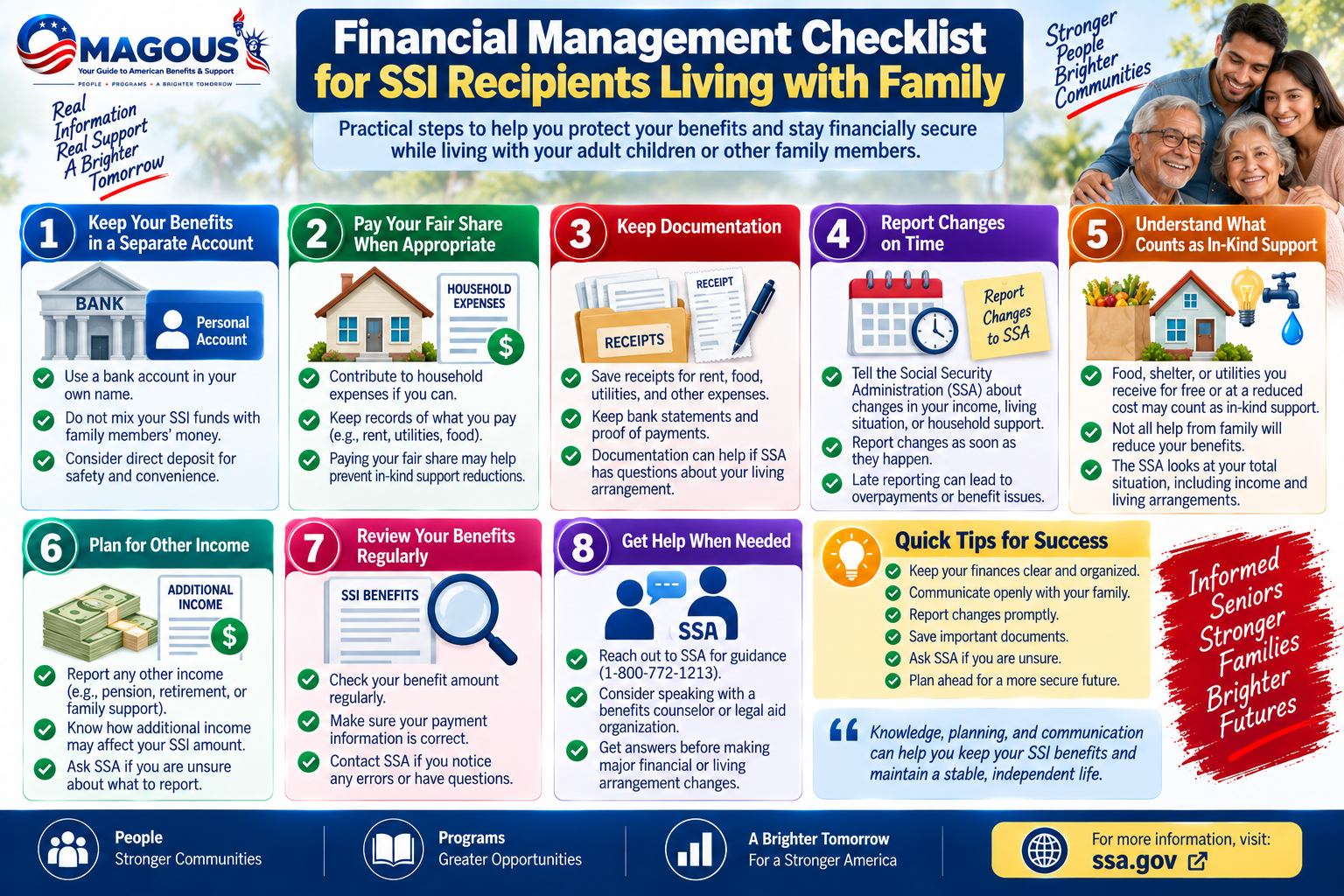
Establish clear financial arrangements. Discuss openly with your children how household expenses will be divided. Put informal agreements in writing, even if it’s just a note listing who pays what monthly.
Maintain separate accounts. If possible, keep your own bank account and avoid joint accounts with adult children. This clearly shows which assets are yours and which belong to them.
Document contributions. If your children help pay for food, utilities, or other expenses, document these contributions. Request receipts and keep records showing amounts and dates.
Report changes promptly. If household expenses or living arrangements change, report to Social Security within 10 days. Being proactive prevents overpayment notices.
Consider a formal rent agreement. If you contribute rent to your children, formalize this arrangement. Have them give you a receipt for the amount, and keep records. This demonstrates you’re paying your fair share.
Avoid commingling assets. Never deposit your SSI or other income into a joint account with your children. Keep accounts separate to avoid resource limit complications.
Common Mistakes Seniors Make
Failing to report living arrangement changes. Seniors often don’t tell Social Security when they move in with children or when household expense-sharing changes, assuming it won’t affect benefits.
Treating a child’s account as their own. Seniors sometimes access money in their child’s account, leading Social Security to count it as a resource.
Not documenting expense-sharing. Without receipts or records showing how costs are divided, Social Security assumes you receive in-kind support.
Giving incomplete information during application. Some seniors minimize their living situation details, fearing it will reduce their benefits. Incomplete disclosures lead to overpayments later.
Not understanding the $20 exclusion. Seniors often don’t realize that in-kind support calculations include a $20 monthly exclusion, so the maximum reduction isn’t always applied.
Assuming benefits will automatically adjust. Social Security doesn’t independently discover changes in living arrangements. You must report them.
Special Circumstances: Caregiver Situations
If you live with adult children who serve as your caregiver—helping with personal care, medical needs, or daily activities—this doesn’t automatically increase your benefits or create special SSI rules.
If your children receive payments for caregiving from you or another source, this affects your finances. Payments you make to your children from your own income or SSI benefit for caregiving services don’t trigger in-kind support rules.
If a government program (such as Medicaid) pays your children for caregiving, this payment doesn’t count as your income and doesn’t reduce your SSI benefit.
Strategies to Maximize Your SSI While Living With Children
Pay a reasonable share of household expenses. Contributing to rent, mortgage, utilities, and food demonstrates financial participation and minimizes ISM concerns.
Formalize arrangements in writing. Even a simple document outlining who pays for what prevents misunderstandings and provides Social Security with clear evidence.
Keep detailed records. Maintain bank statements, receipts, and written documentation of all contributions you make toward household expenses.
Review your case annually. Request a benefit verification letter from Social Security yearly and review it carefully to ensure accuracy.
Report changes immediately. Don’t wait for a periodic review. Contact Social Security within 10 days of any change in living arrangements or expense-sharing.
Consult a benefits counselor. Free counseling services through Aging and Disability Resource Centers can help you navigate complex situations. Learn about senior financial planning resources available in your community.
Frequently Asked Questions
Can I lose my SSI benefits because I live with my children?
No. Living with your children alone doesn’t disqualify you from SSI. You remain eligible as long as your income stays below $943 monthly and resources stay below $2,000. However, if your children completely cover your food and shelter costs without you paying anything, Social Security may reduce your benefit by up to one-third of the federal benefit rate plus $20.
Do my children’s income affect my SSI eligibility?
Your children’s income doesn’t directly affect your SSI benefits. Social Security only counts your personal income toward the limit. However, if your children regularly give you money, that money counts as your unearned income and reduces your benefit dollar-for-dollar.
What if my children add me to their bank account?
If you’re added to your children’s account and have legal access to the funds, Social Security may count the entire account balance as your resource, potentially exceeding the $2,000 limit. To avoid this, maintain separate accounts and ask your children to handle banking arrangements without adding you as an account holder.
Must I pay rent if I live with my children?
You’re not legally required to pay rent to live with family members. However, paying something toward household expenses helps minimize in-kind support issues and demonstrates financial contribution. Even small payments documented clearly provide better protection.
How do I report my living situation to Social Security?
When applying for SSI, provide complete details about who you live with, household expenses, and any support from family members. Social Security will provide you with the appropriate forms, including the Statement Regarding Your Living Arrangements and Care. Always update your case when circumstances change. Visit the Social Security Administration’s SSI page for official forms and guidelines.
Does Medicaid cover the cost of living with my children?
Medicaid doesn’t pay for room and board costs when you live with family. However, Medicaid programs may cover in-home care services if you qualify. Contact your state’s Medicaid office or the Centers for Medicare & Medicaid Services for information on coverage options in your area.
What’s the difference between living with a child and living in a facility?
Living with family is considered an independent living arrangement. Living in a facility (nursing home, assisted living) is different under SSI rules and may involve different benefit calculations. If you’re in a Medicaid-funded facility, your SSI benefit may be reduced significantly compared to living independently. Learn more about nursing facility care through official resources.
How often should I contact Social Security about my situation?
You’re required to report changes within 10 days. Beyond that, annual contact to verify your information is wise. Request a benefit verification letter each year to confirm Social Security has accurate information about your living situation and income. Check Social Security updates and announcements regularly.
Key Takeaways
- SSI eligibility doesn’t end because you live with adult children, but living arrangements can affect your benefit calculation through in-kind support rules.
- Income limits remain the same ($943 monthly for individuals in 2024), and any money your children give you counts as unearned income toward this limit.
- Resource limits are $2,000, and you must clarify whether bank accounts and property are yours or belong to your children to stay compliant.
- In-kind support and maintenance can reduce benefits by up to $328 monthly if your children cover all food and shelter costs, but paying your fair share minimizes this reduction.
- Accurate reporting is critical—inform Social Security of your living situation initially and report changes within 10 days to avoid overpayment issues.
Conclusion
Living with your adult children can be a practical and emotionally fulfilling arrangement during your senior years. Understanding how this living situation intersects with your SSI benefits ensures you receive the full benefits you’re entitled to while staying in compliance with program rules.
The key to success is transparency and documentation. Report your living arrangement clearly to Social Security, pay a reasonable share of household expenses, maintain separate financial accounts, and promptly report any changes. By taking these steps, you can enjoy the benefits of family support while protecting your SSI benefits and financial security.
If your situation is complex—such as shared property ownership or significant financial contributions from family members—consider consulting with a benefits counselor or elder law specialist. These experts can help you navigate specific circumstances and develop strategies that work for your family. Explore elder law resources and professional services in your area.
Remember, Social Security wants you to report accurately. Proactive communication prevents overpayments, keeps your case accurate, and allows you to focus on what matters most: maintaining your financial independence and family relationships.
Important Disclaimer: This article provides general information about SSI benefits for educational purposes and should not be considered legal or financial advice. SSI rules are complex and can vary based on individual circumstances. For personalized guidance regarding your specific situation, consult directly with a Social Security representative or a qualified benefits counselor. For current SSI benefit amounts and eligibility rules, visit the Social Security Administration’s official SSI website. Rules and benefit amounts are subject to change annually. Always verify current information with official sources before making decisions affecting your benefits.