
Quick Answer: Yes. SSI recipients can get SNAP benefits in 2026 if they meet the SNAP eligibility requirements in their state. Receiving SSI does not automatically disqualify someone from SNAP. However, SSI payments count as income when SNAP eligibility is calculated, and the household’s income, deductions, household size, state rules, and other eligibility factors can affect the result.
Can SSI Recipients Get SNAP Benefits in 2026?
Yes, SSI recipients may qualify for SNAP, but receiving SSI alone does not guarantee SNAP eligibility.
The Social Security Administration specifically states that people who receive SSI may be eligible for SNAP assistance. It also explains that SSI benefits count when SNAP eligibility is determined. The final decision is made under SNAP rules by the state or local SNAP agency.
This distinction matters because SSI and SNAP are separate programs. SSI provides monthly cash assistance to people with limited income and resources who are generally age 65 or older, blind, or disabled. SNAP provides food assistance through an Electronic Benefits Transfer (EBT) system.
For 2026, the federal maximum SSI payment is $994 per month for an individual and $1,491 for a couple, although many recipients receive less because of income and other factors. That SSI payment amount does not determine a person’s SNAP benefit by itself.
Does SSI Count as Income for SNAP?
Yes. SSI generally counts as income when SNAP eligibility is calculated.
The SSA’s 2026 guidance explicitly says that SSI benefits count in computing SNAP eligibility. Therefore, an SSI recipient should report the SSI payment when applying for SNAP rather than assuming that SSI is excluded.
SNAP does not simply compare the SSI payment with one universal cutoff and make an automatic decision. The agency considers the household’s circumstances and applies allowable deductions when determining net income.
Depending on the household, relevant deductions may include expenses such as certain shelter costs, dependent care expenses, and qualifying medical expenses. The amount and treatment of deductions can affect whether the household meets the applicable SNAP test.
Why SSI Recipients Receive Different Treatment Under SNAP Income Rules
An SSI recipient is generally receiving SSI because they are 65 or older, blind, or disabled. That status can matter under SNAP’s income-testing rules.
Federal SNAP rules provide a special treatment for households that contain an elderly or disabled member. According to USDA’s SNAP quality-control guidance, households containing an elderly or disabled member generally need to meet the net income test, while other households are generally subject to both gross and net income tests. (snapqcs.fns.usda.gov)
That does not mean every SSI recipient automatically qualifies. The household still has to satisfy the applicable SNAP requirements.
For an SSI recipient, expenses and other household circumstances can therefore make a significant difference in the SNAP determination.
What Are the SNAP Income Limits in 2026?
For FY 2026, the standard SNAP income limits shown below apply to the 48 contiguous states, the District of Columbia, Guam, and the U.S. Virgin Islands. The figures are effective from October 1, 2025, through September 30, 2026. Alaska and Hawaii have higher standards. (fns-prod.azureedge.us)
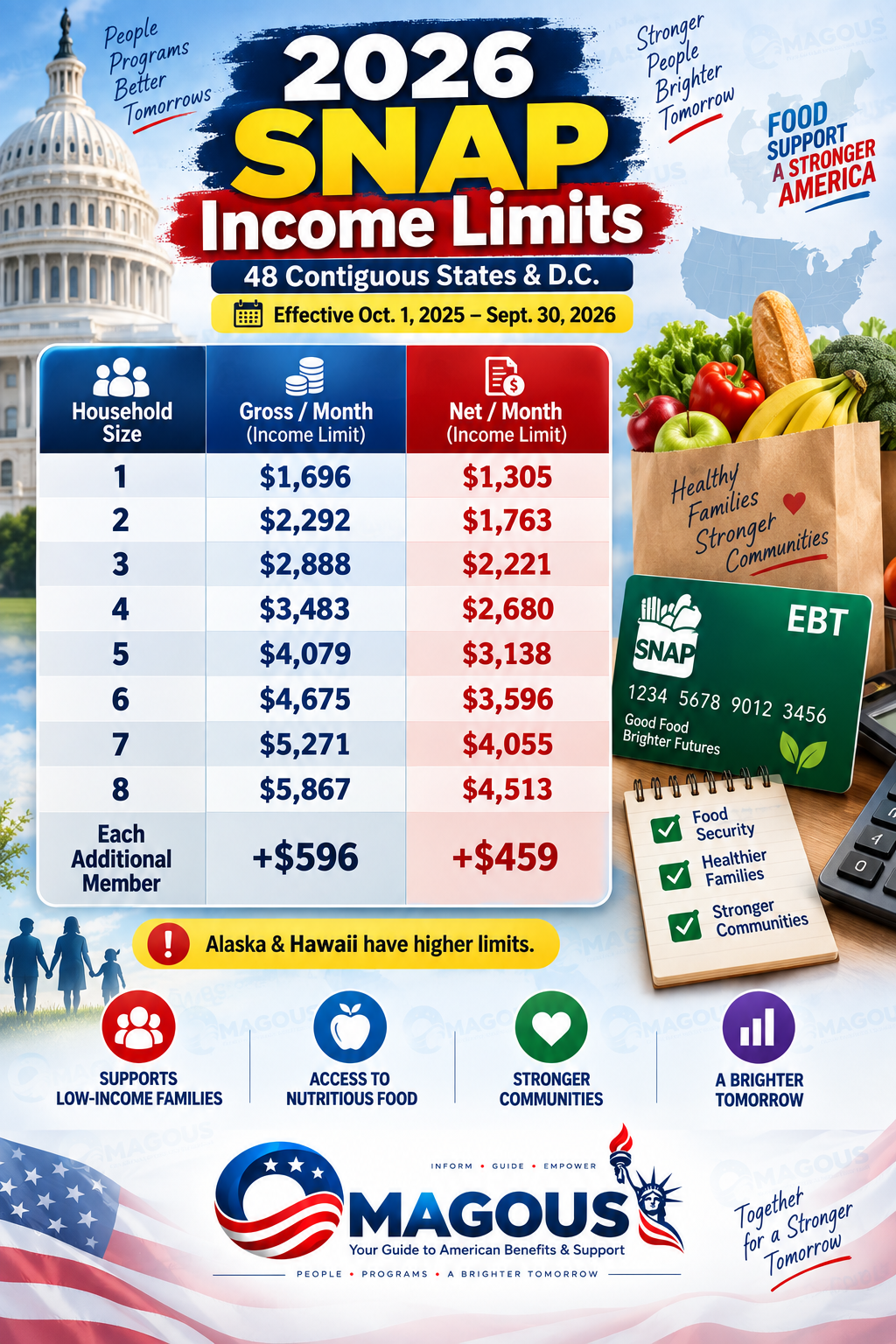
These figures are federal SNAP income standards and should not be treated as a standalone SSI-only eligibility calculator. An SSI recipient’s household may be subject to the special elderly/disabled SNAP rules, and states may also use different options permitted under federal law. (fns-prod.azureedge.us)
| Household Size | Gross Monthly Income | Net Monthly Income |
|---|---|---|
| 1 | $1,696 | $1,305 |
| 2 | $2,292 | $1,763 |
| 3 | $2,888 | $2,221 |
| 4 | $3,483 | $2,680 |
| 5 | $4,079 | $3,138 |
| 6 | $4,675 | $3,596 |
| 7 | $5,271 | $4,055 |
| 8 | $5,867 | $4,513 |
| Each additional person | +$596 | +$459 |
Because the current FY 2026 standards end on September 30, 2026, readers applying after that date should verify the new federal and state figures before relying on this table.
[Official Source: USDA Food and Nutrition Service | FY 2026 SNAP Income Eligibility Standards] (fns-prod.azureedge.us)
How Much SNAP Can an SSI Recipient Get in 2026?
There is no single SNAP amount for all SSI recipients.
The benefit depends on factors such as household size, countable income, deductions, and state rules. USDA’s FY 2026 maximum monthly allotment for a one-person household in the 48 contiguous states and D.C. is $298. The maximum for a four-person household is $994. (ballotpedia.s3.amazonaws.com)
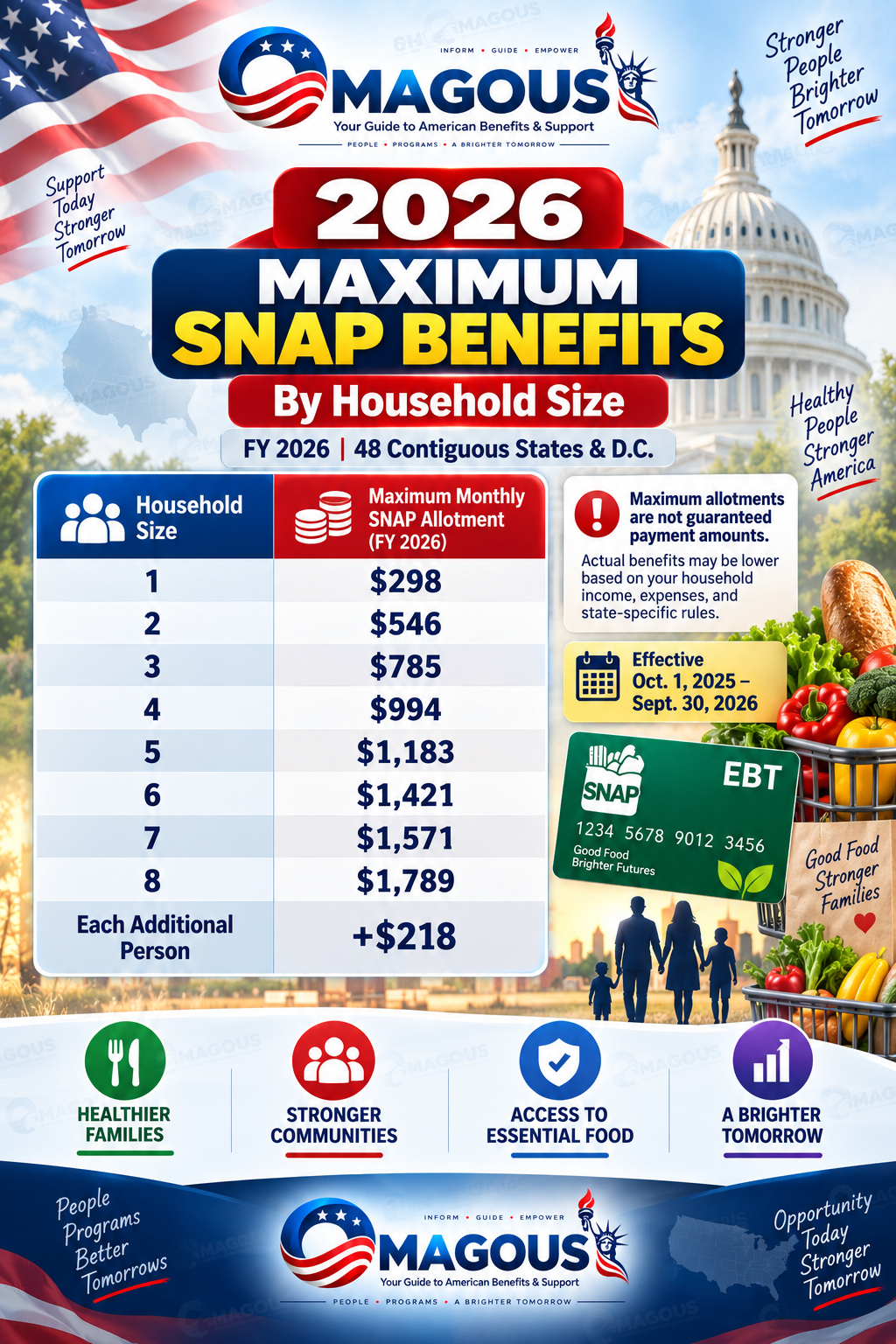
| Household Size | FY 2026 Maximum SNAP Benefit |
|---|---|
| 1 | $298 |
| 2 | $546 |
| 3 | $785 |
| 4 | $994 |
| 5 | $1,183 |
| 6 | $1,421 |
| 7 | $1,571 |
| 8 | $1,789 |
| Each additional person | +$218 |
These are maximum allotments, not guaranteed payments. A household with countable net income may receive less than the maximum. USDA’s SNAP calculation framework uses the household’s net income and household size to determine the benefit. (snapqcs-test.fns.usda.gov)
Can You Get SNAP and SSI at the Same Time?
Yes. A person can receive SSI and SNAP at the same time, provided the household qualifies for SNAP.
The SSA specifically describes SNAP as a program that SSI recipients may also receive. It also notes that some states have processes allowing people applying for or receiving SSI to obtain SNAP information and application assistance through Social Security offices.
Receiving SNAP does not mean that a person automatically loses SSI. The programs use different eligibility rules and serve different purposes.
There is also an important SSI policy change to understand. Since September 30, 2024, food is no longer included in Social Security’s calculation of in-kind support and maintenance (ISM) for SSI purposes. SSA also added SNAP to its list of public income-maintenance programs in connection with its updated rules.
That change should not be confused with SNAP’s own income calculation. SSI still counts when SNAP eligibility is calculated.
Does the SNAP Household Size Matter for SSI Recipients?
Yes. Household composition can affect the applicable income standards and the amount of SNAP benefits.
For an SSI recipient who lives alone, the SNAP calculation is different from that of an SSI recipient who lives with a spouse, children, or other people who are part of the SNAP household.
For example, two households could each contain one SSI recipient but receive different SNAP results because their household sizes, other income, shelter expenses, and deductions are different.
[Internal Link: SNAP Benefits by Household Size in 2026 | [Insert Existing URL]]
Can an SSI Recipient Living Alone Qualify for SNAP?
Yes, an SSI recipient who lives alone may qualify for SNAP if they satisfy the applicable eligibility rules.
The SSA says that in some states, an SSI application may also serve as a SNAP application when the individual lives alone. This is not a universal rule, so applicants should check their state’s SNAP procedures.
Living alone does not automatically make someone eligible, but it can make the household calculation more straightforward because there may be fewer sources of income and fewer household members to consider.
An individual applicant should still report all required income, expenses, resources, and other requested information.
What Deductions Can Help an SSI Household Qualify?
Allowable deductions can reduce the income used in the SNAP calculation.
For elderly or disabled households, medical expenses can be particularly relevant. The SSA’s SNAP facts publication specifically lists medical bills for household members who are age 60 or older or who receive disability benefits, including SSI, among documents that may be needed to verify an application.
Other expenses that may affect the SNAP calculation include:
- Rent or mortgage expenses
- Certain utility costs
- Certain dependent-care expenses
- Qualifying medical expenses
- Other deductions allowed under SNAP rules
The exact deduction and amount depend on SNAP rules and the applicant’s circumstances. Applicants should provide documentation rather than assuming an expense will automatically be deducted.
Does Receiving SSI Automatically Qualify You for SNAP?
No. SSI does not automatically guarantee SNAP eligibility.
The two programs have different eligibility systems. SSA determines SSI eligibility, while SNAP is administered through state agencies under federal USDA rules.
An SSI recipient can still be denied SNAP if the household does not meet applicable eligibility requirements.
At the same time, SSI status can be relevant because the recipient is generally elderly, blind, or disabled, and federal SNAP rules provide special treatment for households containing elderly or disabled members.
That is why an SSI recipient should not assume either “I automatically qualify” or “SSI makes me ineligible.” The correct approach is to apply and allow the SNAP agency to evaluate the household.
How Can an SSI Recipient Apply for SNAP in 2026?
An SSI recipient can apply through their state’s SNAP system or local SNAP office.
The SSA’s SNAP guidance says that people applying for or receiving SSI can obtain SNAP information and an application form at a local Social Security office. When all members of a household are applying for or receiving SSI, Social Security may help complete the SNAP application and forward it to the SNAP office.
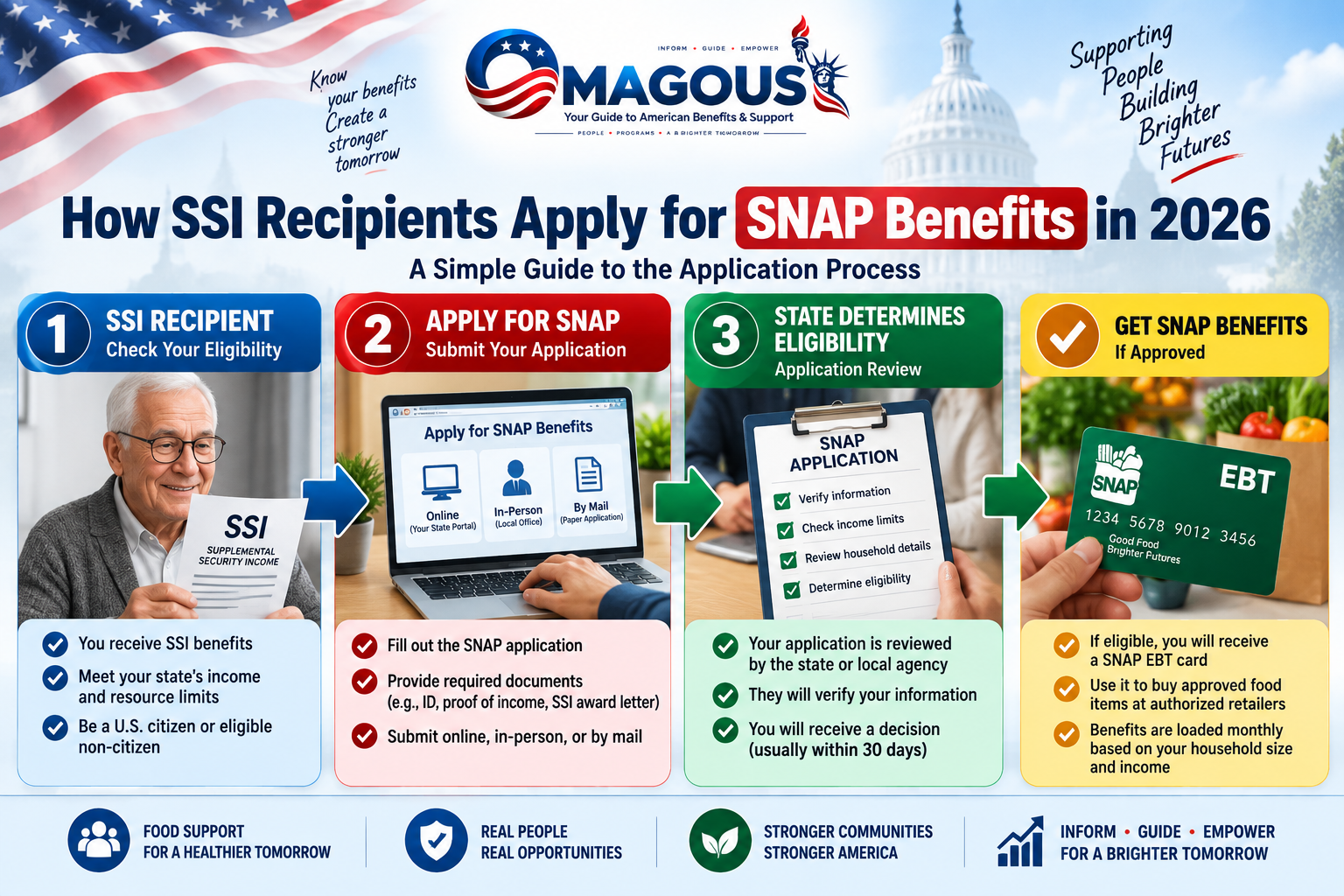
A typical application process can include:
- Find the state SNAP office.
- Submit the SNAP application using the method available in that state.
- Complete the required interview.
- Provide verification documents for income, expenses, identity, household information, and other requested items.
- Wait for the SNAP agency’s eligibility determination.
The application process varies by state. Some states allow online applications, while others may also offer application options by phone, mail, fax, or in person.
[Government Source: USDA Food and Nutrition Service | SNAP State Directory ]
What Documents Should SSI Recipients Have Ready?
Having supporting documents available can make the application process easier.
The SSA’s SNAP publication lists several examples of documentation that may be requested, including proof of income, housing expenses, utilities, dependent-care costs, and qualifying medical expenses. A current Social Security benefit verification letter may be used to verify Social Security-related income.
Common documents may include:
- SSI benefit information or a benefit verification letter
- Identification
- Social Security number information
- Rent or mortgage documentation
- Utility bills or records
- Medical bills for qualifying household members
- Dependent-care expense records
- Documentation of other household income
The SNAP office may request additional information depending on the household.
Does Every State Have the Same SNAP Rules for SSI Recipients?
No. SNAP is a federal program administered through state agencies, and important eligibility procedures can vary by state.
Federal rules establish the basic framework, but states have options in areas such as categorical eligibility, application procedures, deductions, and other program administration. USDA maintains a state directory with information for state SNAP programs.
California provides a useful example of why old information can be misleading. California historically used an SSI “cash-out” policy that made SSI recipients ineligible for CalFresh, but California reversed that policy beginning in 2019. SSI/SSP recipients may now be eligible for CalFresh when the other eligibility requirements are satisfied.
Therefore, articles or social-media posts claiming that “SSI recipients cannot get food stamps” as a universal rule are not an accurate description of the current situation.
[Official Source: California Department of Social Services | CalFresh and SSI/SSP] (cdss.ca.gov)
What Changed for SNAP in 2026?
SNAP rules and benefit standards were updated for federal fiscal year 2026.
USDA’s FY 2026 cost-of-living adjustment established updated income standards, maximum allotments, and deductions effective October 1, 2025. For the 48 contiguous states and D.C., the maximum allotment for one person is $298 per month and the maximum for four people is $994. (ballotpedia.s3.amazonaws.com)
Federal legislative changes also affected SNAP administration during this period. USDA issued implementation guidance concerning provisions of the One Big Beautiful Bill Act of 2025, including changes involving work requirements, energy assistance payments, utility allowances, and other SNAP policies. (fns.usda.gov)
SSI recipients should therefore rely on current information from their state SNAP agency instead of older articles that may describe pre-2026 rules.
Can SSI Recipients Get SNAP Benefits Without Losing SSI?
Generally, receiving SNAP is not itself a reason to stop SSI.
The two programs serve different purposes, and SSA expressly recognizes that a person may receive SSI and also be eligible for SNAP.
The important distinction is that SNAP eligibility can be affected by SSI income, while SNAP itself is not simply treated as additional cash income that automatically makes a person lose SSI. SSA’s updated SSI rules also changed how food is treated in the ISM calculation beginning September 30, 2024.
For an individual case, the state SNAP agency should determine SNAP eligibility, while SSA remains the authority for SSI eligibility and payment questions.
What Should You Do if Your SNAP Application Is Denied?
A SNAP denial does not necessarily mean that every SSI recipient with the same circumstances would be denied.
Review the eligibility notice carefully to see why the agency determined that the household was ineligible. The reason could involve income, household composition, documentation, deductions, resources, or another eligibility requirement.
If something was calculated incorrectly or important information was missing, follow the appeal or fair-hearing instructions contained in the notice. State procedures and deadlines differ, so use the instructions provided by the agency handling the SNAP case.
[Internal Link: How to Check Your SNAP Application Status | [Insert Existing URL]]
Frequently Asked Questions
Can I get food stamps if I receive SSI in 2026?
Yes. SSI recipients may be eligible for SNAP in 2026. SSI does not automatically disqualify a person from SNAP, but SSI payments count when SNAP eligibility is calculated. The household must meet the applicable SNAP requirements, and the final determination is made by the state or local SNAP agency.
Does SSI count as income for SNAP?
Yes. The Social Security Administration states that SSI benefits count in computing SNAP eligibility. Applicants should report their SSI income and provide the requested verification instead of assuming that SSI is excluded from the SNAP calculation.
Can an SSI recipient living alone get SNAP?
Yes, potentially. Living alone does not automatically qualify or disqualify an SSI recipient. The household still has to meet SNAP requirements. SSA also notes that, in some states, an SSI application may serve as a SNAP application when the individual lives alone.
What is the maximum SNAP benefit for one person in 2026?
For FY 2026, the maximum monthly SNAP allotment for a one-person household in the 48 contiguous states and the District of Columbia is $298. This is a maximum, not a guaranteed payment. The actual benefit depends on the household’s SNAP calculation. (fns-prod.azureedge.us)
Do SSI recipients have to pass the same SNAP income test as everyone else?
Households containing an elderly or disabled member receive special treatment under federal SNAP income-testing rules. USDA guidance states that these households generally need to meet the net income test rather than both gross and net tests. State policies can affect how eligibility is administered. (snapqcs.fns.usda.gov)
Can I receive both SSI and SNAP at the same time?
Yes. A person may receive SSI and SNAP at the same time if they meet SNAP eligibility requirements. SSA specifically states that SSI recipients may be eligible for SNAP assistance.
Where do I apply for SNAP if I receive SSI?
You can apply through your state or local SNAP agency. SSA also says that SSI applicants and recipients can obtain SNAP information and an application at a Social Security office. In some circumstances, Social Security can help complete and forward a SNAP application.
Can medical expenses help an SSI recipient qualify for SNAP?
Potentially, yes. SNAP has deductions for qualifying expenses, and medical expenses can be relevant for households containing elderly or disabled members. Applicants may need to provide documentation of qualifying medical bills and expenses. The state SNAP agency makes the final calculation.
Key Takeaways
SSI recipients can get SNAP benefits in 2026, but SSI does not automatically guarantee SNAP eligibility.
- SSI counts as income in the SNAP eligibility calculation.
- Households containing an elderly or disabled member receive special treatment under federal SNAP income-testing rules.
- SNAP benefits depend on household size, income, deductions, and state rules.
- For FY 2026, the maximum SNAP benefit for one person in the 48 contiguous states and D.C. is $298 per month.
- SSI recipients can apply through their state or local SNAP agency, and SSA may provide application assistance in certain circumstances.
Conclusion
Can SSI Recipients Get SNAP Benefits in 2026? Yes, they can. Receiving Supplemental Security Income does not automatically prevent someone from receiving SNAP. However, SSI payments count when SNAP eligibility is calculated, so the household’s income, allowable deductions, household composition, state rules, and other requirements must be considered.
For someone receiving SSI, the practical next step is to apply through the appropriate state SNAP agency and provide complete information about income, housing costs, medical expenses, and other requested expenses. Applying allows the SNAP agency to make an official eligibility determination based on the household’s circumstances.
Disclaimer: This article is provided for general informational purposes and is not a determination of eligibility for SSI or SNAP. SNAP rules, income standards, deductions, and state procedures can change. The official state SNAP agency is responsible for determining SNAP eligibility in an individual case. Readers should verify current requirements with USDA, their state SNAP agency, or the Social Security Administration before making decisions based on this information.



Pingback: How to Apply for Medicare Extra Help With Low Income 2026 - OMAGOUS